Showing posts with label Children. Show all posts

Saturday, September 09, 2017

Dismaying Story #142: My Parents Don’t Like My Boyfriend

Dear Andrew,

I am nineteen years old and I’ve been dating my 21-year-old boyfriend for about a year. We get along great but the only problem is my parents don’t like him. That bothers me because I think it should be up to me who I date. He’s fun to be with and says such nice things. My parents want me to find someone who goes to college like I do, or at least has a job. But it’s not like he doesn’t want to work. He had a part-time job at a store but that ended last summer and he hasn’t been able to find anything even though he is looking. This is the first time I’ve had this problem with my parents and I don’t know how to handle it. We’ve never really fought much before and I don’t like it. My boyfriend is cool about it, though. He just laughs when we talk about it and says not to worry about it, but it still bothers me. Any advice?


Signed, Unhappy

Dear Unhappy,

I can understand why you feel torn. It sounds like you have enjoyed a good relationship with your parents, and now you find yourself at odds over one of the biggest issues in your life – your choice of your current significant other.

You are correct about one thing. In my opinion, it is completely up to you who you date and with whom you eventually settle down, if that is in your future. You are a young adult, it is your life, and you are the one who will be the most affected by your choices.

But ... yes, I have several very large ‘buts’ for you to consider.

I worry that one of the factors here may be what I call The Saturday Night Syndrome. A typical existence for a teenager in college revolves around classes, assignments, and a social life, with maybe a part-time job or some extra-curricular activities like sports thrown in to round out the mix. Your boyfriend doesn’t attend your classes, nor does he share your job or play on your volleyball team. He intersects your world when it comes to hanging out during your leisure time and when you go out on Saturday night. That is the arena where he must shine in order for you to feel good about the experiences you share with him.

You see, couples tend to feel better about each other when they share positive experiences. (Which is why the occasional date night or vacation trip can be so important later in life, when day jobs and mortgages tend to take over.) Based on your letter, I would say your boyfriend is good at helping you enjoy yourself when you’re at the movies or at a party. It sounds like he has some skills when it comes to knowing what to say to you in a social context. And those are all good things. I would also guess you are attracted to him for other reasons, such as his physical attractiveness or whatever else you are responding to in him. Again, there’s nothing wrong with any of that.

The problem is this is not a complete test of how well he may be able to contribute to your long-term happiness. Some young people measure compatibility based on how well things are going right now, when perhaps a some thought about the potential future might shed a different light on things.

I realize not all dating relationships are headed for a long-term commitment. People date for fun, have transition boyfriends – I get it. But you are at an age where relationships often start to get serious. You’ve been with this guy for a year and your letter gives no indication things are likely to slow down or end soon. In my books this is either already a serious relationship or has the potential to become one. I guarantee your parents recognize the same thing.

I haven’t met you or your boyfriend, so I can’t possibly offer an opinion about him as a person or as a potential partner for you. However there are a few things you mentioned in your letter that I recommend you should think about.

Let’s talk about a few life skills you should look for. The first is earning potential. That may sound callous and out of step with a discussion about love and how he makes you feel, but it is a hard fact that we all need to earn a living. That is especially true for someone who might marry a young lady and become a father. Now I can’t pass judgment on anyone who might be struggling to earn an income in today’s economy. Times are tough and jobs are scarce. Not everyone needs to go to college to succeed. The question for me, though, is this: What is your boyfriend doing to improve his situation? Is he working long and hard to scour the hills looking for opportunities? Is he treating his current downtime as an opportunity to improve his skills, learn a trade, or start a small business out of his garage? Has he volunteered to work somewhere for free in the short term so he can create contacts or learn something marketable? Or has he merely submitted a handful of resumes and asked a few friends if they know about any jobs? Everyone can occasionally be faced with challenges, but it is how we respond to them that shows whether we are a go-getter who is likely to succeed no matter what, or someone whose fortunes depend on luck and the good graces of others. I hope my daughter would have her eye out for one of the go-getters.

A second life skill in any relationship between young people is trying to get along with the potential in-laws. Like it or not, every boyfriend has a sales job to do, selling himself to your parents. That can involve communication, compromise, the ability to recognize issues and deal with them, and underlying it all, the desire to create goodwill and harmony. How much effort has your boyfriend put into any of that? I recognize his relationship with your parents is a two-way street and they own half the relationship. He has to do his part, though. If, as you say, he merely laughs off their concerns without taking positive steps to try to mend fences, then that should make you pause and think. Is this how he is likely to approach other important relationships in the future, such as with employers, co-workers, or your friends?

Going along with that, has he shown any concern for how this conflict is affecting you?

You asked about your parents, and all I’ve talked about so far is you and your boyfriend. The reason is I want to give you a perspective that many parents are likely to have on your situation. It seems there are plenty of factors involved that would give your parents reasonable grounds for being concerned, especially since they are likely to be the two people on this planet who are most interested in you ending up with a fulfilling and happy life.

One more thing you said gives me pause. This is not a recurring pattern for you and your parents. I assume you have dated before, which means they didn’t object to your previous boyfriends, just this one. I also have to assume your parents know something about life. They were once your age, dating and watching their friends succeed and fail at numerous relationships. Whether you want to admit it or not, they have some perspective on these sorts of things that you don’t have. So just the fact that they are concerned should make you stop and wonder whether they might have a point.

Please forgive me if any of my assumptions are off base. You might have already thought through many of the points I mentioned. And like I said at the outset, your choice of dating partner should be completely up to you. However, I suggest your parents’ concern should set off major alarm bells and get you thinking about some of the issues I mentioned above. I wish you the best of luck in working through that and, hopefully, arriving at a happy place for everyone concerned.

All the best,
Andrew
Read More ->>

Monday, February 12, 2007

Dismaying Story #113: For the Sake of the Children

Dear Andrew,

I am the mother to a 4 year old brilliant little boy. His father and I have been separated since he was about 10 months old, and since then it has just been the two of us.

About six months ago I started a new job. Upon starting this new job, a co-worker asked what it was like being a single parent as his wife of 18 years had just left him with their three children. He has custody of the children. They are in the process of working out a visitation schedule, but she never showed up for the last scheduled visit.

Over the next few months we became best friends and somewhere along the way we fell in love. This man makes me feel like no other has. He does not try to change me and I do not try to change him. We really complement each other.

The problem I have is with his children. His ex-wife picked up and left without saying so much as a word. She left behind a 2 year old, 7 year old and 14 year old. I do not know her side of the story so I try to stay out of it as much as possible, but every time that I am around I can hear their pain. I listen to the youngest as he wakes in the middle of the night wanting her to comfort him. I see the 7 year old act out in anger, and listen to the words that he says to me. I read what the 14 year old girl writes -- how she misses her and wants her mom to be there.

I know I cannot fill her shoes. I cannot take away their pain although I wish I could. The question that it raises for me is this:

He says his marriage was dragging him down. It was unhealthy for him and essentially for his children. He claims even if I was not in the picture they would never have the conversation that would possibly bring them back together. But I know that with me in the picture, this conversation will never have the chance to take place. If I was not there it might. Even though it was not something that he wanted for himself, should it be something to sacrifice for the sake of the children?

For the last 4 months I have been known as a friend to their father. I felt more comfortable with that especially in their situation. About a month ago we sat down with the oldest and explained what was going on. She greeted it very warmly telling me that she wanted her father to be happy. The seven year old has become quite attached to me, but as his buddy, not his father's girlfriend. The two year old however does not seem to be warming up to it that much, which I can not blame him for. My son has met Chris and his children. The kids really enjoy their play time.

I just want to make sure that my presence right now is not going to do any more damage to them. They are such good kids but are in so much pain. I know Chris is looking out for the best interest of his children, but I do understand where his emotional state could cloud his judgment.

I love this man with all that I am. I do not need him in my life -- even better than that I want him here. This is a choice for me. I just want to make sure that I am making the right choice for all involved.

Signed, Concerned for the Kids


Dear Concerned for the Kids,

First off I should say this is one of the most heartwarming questions I have received. Your question boils down to, "Should I sacrifice myself for the sake of others?" I can tell you are a caring and giving person, and you should feel good about that.

You are asking if you should remove yourself from his life so there would be one less potential impediment to him getting back together with his wife, just on the slim chance that might happen someday.

He says his marriage was troubled, and that the situation was not good for the children. She left him and he ended up with full custody of the children. He has given no indication that he would like to get back together with his ex-wife, nor have there been any moves to get the two of them even talking about something like that.

I understand your idea. You see the children suffering. They want their mother back, AND they want to live in a happy, well-adjusted household. You wonder if they got their mother back, maybe there would be a chance for the functional household to happen as well.

Here's my problem with that vision. They already tried that. The mother, father, and three children were already together, for quite some time ... and it didn't work. I don't know why, and you say you try not to go there, but the result of that 18-year experience was that she left. Now she doesn’t show up for scheduled visits with the children, which is another sign that there are issues.

I think you have to trust your boyfriend's instincts on this one. If he thought another go with their mother would work out, wouldn't he say so? If a possible reconciliation was in the wind -- if you had heard some hint of that -- then your reasoning for stepping aside might have some validity. That's not the case, though.

If the two of them were to get back together again, it would thrust the children back into a broken home. There is a good chance that would lessen their quality of life rather than improve it. Again, you and I both have to rely on their father's instincts on this one. He thinks they are better off now. As difficult as this transition is on the children, hopefully they are on their way to a more stable, less emotional home life than they knew previously. It is not always better to stay together for the sake of the children.

Suppose the two of them reconciled ... and then separated again. You have to admit a reconciliation would be tenuous. What kind of emotional roller coaster would that be for the children?

All in all, your idea of stepping aside so the mother might return doesn't seem to hold water.

HOWEVER ... you still might want to proceed with caution.

You met this man just after his wife left. He had very little time to deal with the issues in his own mind before you came on the scene. The same is true of the children. They were only beginning their grieving and adjusting process when you showed up.

In a situation like that, I can see how having you on the scene is an extra element for the kids to have to deal with. It's hard to deal with Mom leaving, and also difficult to deal with the idea of Dad being with someone else. Even if Mom never comes back, your presence may add to their emotional burden, at least in the short term. His priority right now should be his children. They are hurting, and badly. His love life with you should take second chair to doing whatever it takes to help the children through this time.

On the other hand, having a warm, giving, stable female presence might be a help for them. You mentioned that at least two of his children have given you positive feedback. You can judge whether your presence is, on balance, positive or negative for the children. (And I mean independently of the issue of their mother potentially returning.)

In summary, you are right to think of the children's interests first. Their mother's return, however, may not automatically be in their best interest.

Good luck with your situation. I hope everyone involved makes the adjustments as well as is possible.

All the best,
Andrew
Read More ->>

Sunday, December 10, 2006

Dismaying Story #92: Where Are All the Good Men?

Dear Andrew,

I am contemplating a relationship with a man older than myself who has two sons, aged 4 and 7. They live with their mother, but he spends as much time with them as possible and visits daily. I am 21 and he is 30. I was looking around online for advice about dating someone with children, and while there seems to be a wealth of information regarding dating as a single parent, there seems to be nothing about this topic. My concerns are not about future logistics as a "mother figure," as the relationship is not yet begun, but rather to do with our respective life experiences, and the bearing this will have on the success of a relationship. I feel that having children fundamentally changes people's life perspective and priorities. I fear that because I have no children, I could never really understand and appreciate his life perspective. I also feel I would always be lower priority than his children. Do I really want to be third in line?

I am also fearful of a relationship at all. I wonder if it's worth getting into another relationship that seems destined to fail, and after reading an older posting on your site (Dismaying Story #42: When an Age Gap Doesn't Work), I wonder if the same applies to me. Am I only attracted to this man because I think it will fail? We have talked about pursuing the relationship and have both agreed the timing is not right because of our various past difficult relationships, and the holiday season bringing stress to his family. We have discussed and agreed on all the difficulties a relationship of this nature would pose; issues like my still wanting to "party," his children, etc. Despite all this logical analysis and all the things stacked against it, I still feel like I want to pursue it. I guess I am confused because I am now second guessing myself and wondering if it's for the right reasons. Could I be just imagining our strong connection because it's what I desperately want to find?

I always seem to make the wrong choice with men and am terrified I will do it again. I constantly ask "Where are all the nice men?" but I never seem to be attracted to the nice ones. I know many women feel this way. Former short but serious relationships include a compulsive liar, a jealous control freak who emotionally abused me, and a conman/fraudster who was actually deported! With this list, I am not confident in my ability to pick suitable partners!

Signed, Afraid, Confused and Petrified


Dear Afraid,

Oftentimes someone will describe a relationship to me and ask me for an opinion on whether I think it could work out. Occasionally the signs are so clear that I must express my doubt, for instance in the presence of violent or emotional abuse, addiction or adultery.

Other times there are obvious challenges but I have to admit that I can't predict whether the union might or might not work out. The relationship game is not that cut and dry. Most of us know couples who seemed destined for each other but ended up in divorce court, and others who overcame tremendous odds and ended up growing old together.

Your story involves a few obvious obstacles, such as the age gap, your childless /partying lifestyle versus his role as a parent, and your insecurity over whether he would feel a closer bond with you or with his children. Could this possibly work out between the two of you? Sure, it might. Would there likely be problems along the way? Oh yeah, I'd say you could count on that.

But don't all of us need to work past difficulties in order to make our relationships work? Absolutely. The issue here is that you know about a few of the challenges right from the beginning.

That is actually a good sign. Both you and this guy have demonstrated level-headedness by recognizing that all is not peaches and cream. You have your eyes wide open, have discussed the potential issues rationally, and have exhibited caution. This type of maturity can serve you well as you try to work past issues in a relationship.

On the other hand, you still have this fire in your belly that is driving you forward. Passion, lust, desire, fun, tossing logic out the window and grabbing him with both hands and impulsively running away for the weekend -- these are what make relationships such an invigorating and rewarding part of life. Yes, you should listen to these instincts too.

How, then, can you resolve your quandary? In my opinion you can't -- not in your current state, not with any reasonable likelihood of success. Here's why.

In your letter, you talk about your desperation and lack of confidence when it comes to relationships. You want badly to be happily hooked up with a nice guy, but fear that it will never happen, that you in particular could never make it happen. Unfortunately your fear serves as a self-fulfilling prophecy. It makes you enter relationships with an expectation of failure and, most likely, a monumental chip on your shoulder. Guys who are attracted to quiet confidence and self-assured women will find this a turn-off; they will stay away in droves. On the other hand, these are precisely the characteristics that will draw in the men with a controlling nature. They will circle in on you from miles away like sharks following the scent of blood in the water. I have a great deal of confidence that this is part of the reason for your dysfunctional dating history.

Once you are in a relationship, your fear also stands in the way of making it work, or at least of making it work well. The inevitable issues that crop up will be blown out of proportion in your mind, serving as immediate reinforcement of your prediction that things wouldn't work out, that he wouldn't want you, and so on.

So here's my answer to your question. Before you can make a judgment about this or any other potential partner, you should focus on healing your own wounded spirit. Several of the posts on this site deal with developing humble self-confidence and stopping negative self-talk. You can start there, and consider finding yourself a coach or therapist to help you with these issues.

Coincidentally, yesterday's post includes a wonderful strategy for dealing with exactly your situation. Have a look at it; basically the idea is to imagine your life in the long term without a significant other, tweak this vision until you are happy with it, and then set out to make it happen. Once you are not so desperate to find a man, you will have an entirely differently perspective for evaluating potential relationships. More than that, you will start attracting a different sort of man, the kind who does not gravitate to needy, desperate women.

For the record, he should have a stronger bond with his children than with you. In fact, I would recommend you stay away from the guy if that were not the case. His children are dealing with the trauma of the breakup of their parents' marriage. They need his unswerving attention and devotion. They need it now and they need it often. Any father who allowed a new dating relationship to take precedence over those needs is probably not the kind of guy you want to end up with. Yes, it would be a challenge to play second (or third) fiddle for a while, and that may not be a challenge you want or need. His children are, however, where his first loyalties must reside.

All the best,
Andrew
Read More ->>
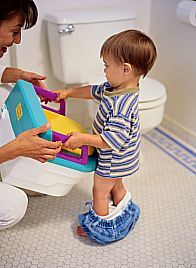
Friday, December 08, 2006

Dismaying Story #91: The Contented Wetter

Dear Andrew,

What do you do when your three-year-old reverts back to wetting his pants? We are using regular trainers (cloth) and the wet doesn't seem to bother him. He still goes poo-poo in the potty, but now we're back to square one after three months of going in the potty. Any ideas?

Signed, Frequently Washing Clothes


Dear Frequently,

I would look at three possible factors: physical, emotional distractions, and behavior in response to rewards and/or penalties.

Let's start with the physical. At some point in this process, if nothing else seems to be working, you might want to consider taking your son to a physician to rule out urinary infection or other conditions that might make it more difficult for him to make it to the potty. If such accidents were to happen, some children may treat them as if they were no big deal in the hopes of avoiding a reprimand.

I suspect your problem is more likely to be a behavioral issue, though, especially if he has no other noticeable symptoms and is not complaining of any discomfort.

Has anything changed in his life that might be distracting for him? Using the potty is a new thing for him; it is not yet instinct. He still has to make a conscious decision to get up and go. If he is spending a major portion of his brain cycles worrying about some life issue, this can dramatically reduce his ability to remember to go to the potty. This could be anything he would find traumatic -- a new babysitter, Mommy and Daddy fighting more than usual, an increased level of tension in your home, and so on. If you know of any such issue, it might help to take steps to reduce the impact on him. Talk to him and help him put his mind at ease. This may not solve the issue, but it could remove a significant roadblock to doing so.

In terms of pros and cons, look at the issue from his point of view. He's hanging out, playing with some cool toy cars, and generally having a good time. Then the urge hits and he has a choice. Should he leave the cars (which at the moment is not something he wants to do) to go use the potty? Well, he figures, what's in it for me? What is my reward for going? Is it greater than the cost of staying where I am? That might have been the case when you first started the toilet training. I suspect he received plenty of attaboys when he first used the potty. Time has passed, however, and now maybe Mom and Dad take it for granted. He no longer gets the external reward. Sure, maybe he would prefer the dry pants, but you said this is no big deal to him, perhaps not as big a deal as taking a break from whatever he happens to be doing at the time.

One thing you can try is to change the equation for him. Increase the cost of peeing in his pants, as well as the reward for going in the potty. That doesn't mean you have to be angry or punish him. Instead, make it so he has to bear the cost of the "accident." Give him as little assistance as possible in removing the wet clothes. He may struggle a bit getting them off, but that's good -- it means an even longer break from his fun activity than it would have been if he had used the potty. Make him carry the wet clothes to the washing machine or laundry basket. He should get a wash cloth, run the water until it is warm, wet the cloth, and wash and dry himself off. You may have to help him if you want to avoid puddles on the floor, but do so as little as possible. Then it's off to the laundry again with the cloth. Next the two of you can visit his bedroom where he must pick out new clothes and do his best to put them on. Let him struggle with it for a while. Once that is accomplished, maybe you can get him to wipe the damp spot he made where he had the accident.

There is no need to act the least bit upset at any point in this process. He already knows you don't like the wetting, and now he is learning why -- because messes mean lots of work, and now it means lots of work for him too! He'll hate the disruption, which is exactly what you want.

On the reward side, you want to catch him succeeding at peeing in the potty and give him over-the-top praise and encouragement. You may not have had any chances recently to do that, so you might have to manufacture a few. Schedule a couple of hours when you can give him your full attention. Dress him in just training pants (turn up the heat if you have to) and offer him plenty of his favorite juice. Sock it right to him so hopefully he will have to pee several times during this session. As the two of you are playing, ask him frequently if he has to go to the potty. Tell him you expect him to make it there when the time comes. If he doesn't make it, you are back to the clean-up routine. If he succeeds, heap on the praise. Tell him how proud his grandmother will be to hear about his great accomplishment, how happy Daddy will be when he gets home. Celebrate after his success with a treat from the kitchen.

The combination of increasing both the cost and the reward should be effective.

Finally, don't forget to explain to him the reasons for all of this. Too often we forget that our little people are highly intelligent and can make better choices if they have all the facts. Make sure you explain to him how important it is for him to use the potty. Tell him about the extra laundry Mommy and Daddy have to do, how nobody likes the smell, and so on. Give him every possible reason to make the right decision.

I hope that helps. Good luck and let me know how it turns out.

All the best,
Andrew

I'm still looking for more input on this week's Question of the Week about domestic violence. Let us know what you think is the best way to deal with this issue.
Read More ->>

Friday, November 17, 2006

Dismaying Story #83: Something Niggles Him

Dear Andrew,

Please help me understand my partner. I am 41 years old and my partner is 30 years old. We get on fantastically well. He always says how comfortable and relaxed he is in my company, and we have very similar interests. He says he has never been with anyone before that he gets on so well with BUT he says the relationship is 99% perfect. Something niggles him always.

He did say after going out with me for 3 days that the relationship probably won't work since his ideal partner will be a similar age to him and with no children. I have two children one 12 years and one who's 8 years and they all get on remarkably well. He encourages us all to go out together which I have never had before with any other relationship.

I know I can't change his mind. He says we are very much attached to each other but he can't get the thoughts of his ideal partner out of his head.

I have always been under the impression you marry your best friend as he may never find the perfect person. We see each other every day and text every day and do absolutely loads together every week. We are sexually compatible but as his thoughts come back to him and we get serious again he backs off, as if he's frightened of getting too close.

Can you help understand his thoughts? Will he ever change his thoughts?

Signed, Not His Ideal Partner


Dear Not His Ideal Partner,

You are an ideal partner, just not for this guy. You need to find someone who will appreciate you for what you are.

Yes, I understand his thoughts very well. They go something like this: "Wow, what a great deal I have. I get to have sex when I want it. I get a companion to do fun things with me so I don't have to be lonely. I can even hang with her kids when I feel like it. And the icing on the cake? I don't have to promise her a darn thing! I can insult her, tell her she is not good enough for me and that I would really prefer someone different, and it doesn't matter! She still wants me around. This is fantastic. So until someone better comes along, hey, I might as well stick around."

His message to you is unequivocal and clear: "You are not what I want."

So here is my question to you. Why would you want a partner who doesn't want you? The fact that he is still hanging around doesn't mean that he really wants you and he just doesn't know it. It doesn't mean that he will realize over time how much you have come to matter to him. It simply means that he is getting a payoff for being with you today. He gets sex ... today. He gets companionship ... today. If you start talking about long term commitment, then again he tells you that he is most definitely not interested in that, at least not with you.

Why would you put up with that?

Because it means you don't have to be alone ... today. You are also getting a short-term payoff for being with him. More than that, you get that most precious of commodities in relationships -- you get hope. As long as he is hanging around, you can hope things will change. You hope he will eventually see what a wonderful relationship you have and realize he can't live without you.

Hope is a great thing, but in this case it is blinding you from seeing the truth. Your hope is trapping you in a go-nowhere relationship. It is preventing you from moving on and finding a guy who appreciates what an amazing person you really are.

His thoughts will not change. For whatever reasons, he is just not that into you. My advice is to accept that and walk away. Show this guy the door. Only then will you have real hope, because only then will you be available for the partner you deserve, the one who isn't constantly telling you that you are not good enough.

You deserve better than that. Give yourself permission to go find it. The right man for you is out there, I promise.

All the best,
Andrew

There have only been a few responses to this week's Question of the Week about how to make a relationship survive (and hopefully even thrive) during periods of enforced separation. If you have some thoughts on this topic, why not take a moment and contribute to the discussion. I'll post a few thoughts on this tomorrow.
Read More ->>

Friday, October 27, 2006

Dismaying Story #74: Ex-Husband, Life-Long Father

Hi Everyone,

I'm on the road today so I'm a little late posting. I wrote this morning on the airplane and now that I've arrived at my hotel (in a warm, sunny destination :o) I'm able to post. I hope you are having a great day.

Dear Andrew,

My ex-husband insists on negatively commenting on my daughter’s appearance – hair, clothes, shoes, etc. No matter what she wears or what she does with her hair, he tells her she needs to “do something” different.

I’ve tried to stay out of it, but she comes to me heartbroken or lately, incensed over her father’s comments. Oddly, she resembles her father much more in appearance than she does me. How can I help without interfering in their relationship?

Signed, Caught in the Middle


Dear Caught,

You can't. Interfere away because helping sounds like a good idea.

I would approach this as if you were still together. You no longer share a marriage, but you are still co-parenting and you should do your best to minimize the effects of your separation on your children.

How would you handle it if you were all living in the same house? I bet you would have a private chat with him. You would ask him why he is doing this and tell him what kind of effect he is having on your daughter. Then, depending on the causes, you would look for a change. Do the same here.

I can only assume from your letter that his complaints about her appearance are largely baseless. Presumably she isn't going out the door in the morning looking like a vampy version of Madonna in concert. What, then, could his reasons be? The obvious question is whether he has resentment because of the divorce. Do you have primary custody of your daughter? Any contact with her could be a reminder of his frustration, putting him in a grumpy mood whenever he sees her. Or perhaps he has unrealistic and old-fashioned expectations of how young ladies should present themselves. If there is a new partner in his life, her resentment over you or his children could play into this; he could be reacting to and passing along negative sentiments that originate with her.

I can't predict which, if any, of these factors may be at work. If I were you, though, I would talk to him and see if he knows. Explain to him why the criticism has to stop and insist that he do so. As an ex you may have less leverage to ask for change than you did when you were married, but you should still try. If this is displaced resentment of you, then talking out the issues between the two of you may reduce the amount that spills over onto your daughter.

In addition, you can coach your daughter on how to handle criticism. This is not the last time in her life she will face it, and coping with it is an important life skill. We all need to be able to maintain a positive self-image in the face of negative external feedback. As many letter writers have already attested on this site, that is not always easy to do. Explain to her that she will face various forms of negative feedback in school, on the job, when she has a significant other, when she imposes unpopular rules on her own children, and so on. Help her understand the need to evaluate her own behavior objectively and honestly, to take ownership of any legitimate issues that others have raised, to use such feedback to improve in a constructive way, and to have the confidence to shed the emotional effects of unfounded criticism.

Has she actually explained to her father how his words make her feel? As unlikely as it may seem, it's possible he has no idea what kind of effect he is having on her. Hearing it directly from her might be the wake-up call he needs. Even if he won't listen, she is likely to feel better about herself (less like a victim) if she is able to stand up for herself in a mature, reasonable way.

If you have gained some insight into the reasons for his behavior, you may be able to help your daughter by explaining them to her. For example, this may be more of a problem between two ex-spouses, which he is unfortunately turning into a problem that involves your daughter. That still means she has an issue with her Dad, but it may help her to know that it's not just about her.

Hopefully treating him as a current co-parent rather than solely as an ex-spouse will make a difference. Good luck!

All the best,
Andrew

Do you have a group of regulars who visit your blog and leave comments? If so, then the current Question of the Week applies to you. Today is the last day to check it out before I provide a response tomorrow.
Read More ->>

Saturday, October 14, 2006

Ask the Faithful Readers #10: Step-Parenting Advice

Dear Faithful Reader,

One of the questions posed in my recent interview with Basil was: What pitfalls should couples with children from previous relationships be wary of?

And here was my response:

That sounds like a good candidate for an "Ask the Faithful Readers" question. The folks who have been there, done that would certainly be able to provide plenty of valuable advice based on experience. Here are a couple of ideas that come to mind:

1) Beware of trying to become an "instant parent" to your partner's children. It takes time to gain their trust and respect.

2) A step-parent will not always achieve exactly the same role in a child's life as the natural parent. For example, some children are older when their parent re-marries. It often works best if kids in this situation are disciplined by the natural parent. On the other hand, plenty of folks consider their step-parents simply as "Mom" or "Dad." It depends on the circumstances.


Are you or your spouse a step-parent? Do you have a friend or family member who has lived through the challenges (and the joys)? What advice would you offer to someone who is about to become a step-parent?

I will post my personal favorite comment next Saturday with a link to the respondent's blog.

Signed, The Inquiring Advice Guy
Read More ->>

Thursday, October 05, 2006

Dismaying Story #65: Beyond the Five-Minute Drill

A few months ago I published an article about The Five-Minute Drill, a technique to deal with young children who cry at bedtime and won't go to sleep. Do you go in and soothe them ... only to be right back in the same boat when you leave again? Do you stay out and endure the pain of their protracted crying? The Five-Minute Drill offers an effective third alternative.

A few moms have written to me since then, asking for clarification of how to apply this technique in their specific situations. The following is one such email conversation (with the names removed), which shows how one issue can sometimes hide another.

Dear Andrew,

I tried the 5-minute Drill with my two-year-old and it hasn't worked! I need help! What IS working actually makes me feel really bad.

Two weeks ago my psychiatrist made a suggestion on what I should do: "Hold the Door Shut." I talked it over with my husband and he wasn't okay with it either. After a couple hours of struggling with her I ended up trying his suggestion, and well it worked, kind of. My daughter screamed and banged on the door until she fell asleep on the floor in front of her door. When my husband went to check in on her after her room was quiet for awhile, he woke her up because he couldn't open the door! By this time we were EXTREMELY tired and gave into the evil, sleeping with Mom and Dad. The next night we resorted to holding her door shut again (after trying the 5-minute drill for a couple hours). This time she fell asleep under her bed. We left her there, and around 3 am she woke up and didn't know where she was and freaked out.

I've tried sleeping on her floor until she falls asleep, which I really don't want to make a habit of! I've tried letting her leave her light on and read books. I could go on and on.

Signed, Tired Mom


Dear Tired,

Sorry to hear of your troubles. I would be uncomfortable with holding the door too.

Let me ask you this. How would you handle it if she threw a fit over something she wanted you to buy her in a store? Or over not eating her food? Or over not wanting to wear the clothes you bought her?

Have you done the same thing here? She is throwing a fit over something she doesn't want to do. In those other cases, I bet she would find out in no uncertain terms how upset you were with her behavior and how it is completely unacceptable. Has your feedback conveyed this message in this case? Try using the same approach you would over any other situation where she acts in a way you find unacceptable. Make sure she knows you won't stand for it. Different people use different methods; do what you feel comfortable with.

All the best,
Andrew

Dear Andrew,

Thank you. It is seriously going to take a very strong front!

She is extreme about everything. If you put her in clothes she doesn't want to wear, she strips the clothes off. If you feed her something she doesn't want to eat, she throws it. Her tantrums in the store...well, that's the reason I refuse to shop without my husband!

She is the sweetest most well-mannered child ON HER TERMS! We'll have to keep working at it...with LOTS of patience!!

Signed, Tired Mom


Dear Tired,

Aha! (Hey, that's fun to say :o) The pattern becomes more clear. She is not just throwing tantrums over bedtime, but about lots of things in life. This is a struggle for control between the two of you. It's possible you are actually showing too much patience in those situations. When you tolerate her tantrums, this can make her feel insecure. Kids need to know that someone is looking after them, that they are NOT in control, because they are incapable of looking after themselves and the world is a scary place if Mom and Dad aren't in control. You need to set firm boundaries on what you consider to be acceptable behavior and take control. You can use whatever strategy you want for giving the message of intolerance (e.g. timeouts, removing both of you from the situation, ignoring the undesirable behavior, whatever you choose) but it must be applied consistently. Every. Single. Time. You must be large and in charge. She needs it, and you definitely need it.

I suspect if you can get on top of this more general issue, the nighttime issue will go away along with it.

All the best,
Andrew

Not many people have answered this week's Ask the Faithful Readers question. I'd love to hear about the special friends with whom you always re-connect instantly regardless of how long you've been apart.
Read More ->>

Saturday, September 02, 2006

If You Love Them, Set Them Free

Last week I asked about the struggles that arise as teens gain independence and parents must find a way to let go. Many thanks to all the readers who contributed comments. The sheer volume of responses is, I think, an indication of the importance of this issue and the complexities involved.

No single theme dominated your responses. You mentioned a variety of approaches, including the following:
  • Talk a lot with your children. Discuss important life issues. Teach values and skills. Start when they are very young and continue until the teens become convinced you don't know anything anymore. Then you must step back and trust the foundation you built.
  • If they still live under my roof then they must live by my rules.
  • It is important to encourage good behavior in teens, not just to prohibit the bad.
  • Once they move out, young adults have a need to assert their own control.
  • At some point you need to give more control to the teens. Several respondents mentioned a message like, "That is not what I would do but it's your decision. I'm here for you if you need me."
  • Ban the big no-nos and don't sweat the small stuff.
  • It's not the job of a parent to be a friend.
  • Some parents are tempted to be strict because they fear the child's behavior might reflect poorly on the parents.
  • Being firm and setting limits has a subtext; we love you and we want you to be safe.
  • Parents must show by example, not just tell.
Perhaps the overall message is that letting go can be a difficult struggle, even when parents are mindful of the issues. These difficulties come shining through in the comment from Lisa, who maintains a site called Internet Lovers. Lisa writes:

My kids are 15 1/2 and 17. I've worried all the time about letting my boys go...when is the right time? What if something happens they don't know how to handle? What if they get in with the wrong crowd? God forbid, what if they decide to experiment with drugs? The list is endless.

I feel I've done the best I can at teaching my teens the differences between right and wrong, good and bad. As far as I believe, we instill these traits into them from a very early age. It's been a rocky road for me to let them slowly go over the years. But I grit my teeth and try to show that I have absolute faith in their decisions. I have to trust that I've taught them well, and I have to have faith that they will follow through with that, putting their own unique spin on it.

I say "It's not something I would do, but if that's how you want to do it, then ok, it's up to you." I think this lets them know I'm not keen, but they have a right to do it their own way. If they fall on their faces, they know it happened because of their choice and hopefully learn from it...and it stops me from coming out with "I told you so." Because by twisting the words a little, I didn't lol

Besides the 'typical' teenage changes and angst, and the battle of testosterone going on between my boys during their respective puberties...we haven't done so badly really.

And saying that, I don't think I've ever questioned my own parenting ability more than I have in the past 2 years.


I suspect Lisa's willingness to question her own approach is exactly the strength that allows her to figure out what her boys need most.

Thanks again to everyone for pitching in.
Read More ->>

Saturday, August 26, 2006

Ask the Faithful Readers #4 - Learning to Let Go

Dear Faithful Reader,

Parents often claim that their relationships with teenaged children can bring unique challenges. The desire of young people to spread their wings and become independent adults creates a natural source of conflict. Parents who have been used to giving direction now face opposition when they attempt to do so. We often worry when we must let go, knowing our children might stumble but that they need to take on new responsibilities. I have had people tell me, "I became good friends with my parents, but only AFTER I moved out of the house."

What are your experiences with this situation, either with your children or from your own days as a teenager? What obstacles can make this particularly challenging? What strategies can help ease the way?

Signed, The Inquiring Advice Guy

Comments are preferable for this one (rather than emails), since I'm sure everyone would like to see the responses. I will post my personal favorite next week with a link to the winner's blog.
Read More ->>

Monday, August 14, 2006

Dismaying Story #32: To Procreate or Not to Procreate

Dear Andrew,

My husband and I have been married for 2.5 years and living together for 3.5 years. He's 33, I'm 35. I have been married / divorced once before (divorced six years before marrying again, btw) but I was my husband's first serious relationship of any kind.

Things were okay for about a year after we were married, but then some pretty serious problems involving finances, substance abuse and lack of communication began to arise, resulting from both of our behavior patterns, not just one of us. These issues resulted in our being separated for a year (my idea), but we recently moved back in together to try and work things out. The aforementioned issues are still present, but he and I are both trying to work on them; it's simply going to take some time to resolve them, particularly in regard to the finances. Our relationship is still fairly tumultuous but isn't as bad as it was before we separated; I think things could work out in the long run.

I've already had a Chapter 7 bankruptcy, but my husband still has something like $22,000 worth of credit card debt. Furthermore, we both have student loans that are in deferment (we're both part time students, looking to graduate within about 2.5 years). We share no credit card or bank accounts. We are trying to pay down the debt but with our meager income it will take years.

The issue is that my husband wants us to have children, and soon. Before I met him I never wanted children -- I never saw myself having a life conducive to family and my own family history is pretty dysfunctional to say the least -- mother married five times, father splitting when I was a baby, endless emotional strife at home, etc. My husband, though, is so warm and nurturing, the kind of person who would never abandon his family. I fell in love with the idea in a pipe-dream sort of way but I've always had serious practical questions. The romantic, sweet notion of having babies was nice while cuddling with my husband, but how could we pull it off while maintaining any sort of stable and secure lifestyle?

My husband is anxious to begin trying within a year. In terms of pure biology I can see his point but when viewed within the context of where we are in life it makes no sense to me. I would have to give up my job (daycare is far too expensive), curtail my schooling (career suicide for me) and assume pretty much sole responsibility for the house and offspring while my husband continues to work full time and go to school part time. Meanwhile, the credit card bills will continue to collect interest, the student loan companies will want their money and my husband's still meager salary couldn't possibly cover everything.

My husband dismisses my concerns as being overly negative and simply says things will work out somehow. Considering that I am expected to make the majority of the sacrifices, I'm having a hard time buying such cavalier statements. I love my husband but I don't think either of us (individually or as a couple) are ready to negotiate such an undertaking without an inevitably disastrous outcome. I'm afraid that if I suggest that we hold off for a few years that he will think that I'm cheating him out of something and will ask for a divorce.

Signed, Leery of Becoming a Mommy


Dear Leery,

I can't possibly come down unequivocally on one side or the other of your issue and say, "This is what I think you should do." It would be incredibly presumptuous of me to do so for such an important life decision. You obviously have concerns, however, and have asked me to provide an opinion on whether your concerns have merit. That I can certainly do.

I'd like to start with your last statement; you are afraid your husband might divorce you if you don't give in to his request. Worries over the tenuousness of your marriage might not be the best reason to consider having children. If the bond between the two of you is so weak that a disagreement like this would dissolve it, then you would likely be in danger of separating anyway when the extra stresses of raising children arrive. If your bond is strong, then the timing of when you have children should not be a make or break issue. Either way, the threat of divorce should not be enough to make you ignore all the other issues you mentioned; it should make you take them all the more seriously.

Let's assume you decide to have a baby within a year or two. Realistically, all the issues you mentioned will still be around; there is nothing to indicate you are on the verge of eradicating any of them from your life. Hopefully you are aware that adding an infant to the mix will not make any of those issues easier to deal with. Instead, you will have even more pressure:
  • Your money situation will be worsened because of loss of your income plus considerable childcare expenses, even with you home full-time. Clothing, diapers, car seat, crib, toys, high chair, food -- they all cost money and plenty of it.
  • Both you and your husband will be sleep deprived, even if you try to carry the bulk of the night-time responsibilities. If he thinks working full-time and studying part-time is a challenge, wait until he tries it with less sleep, an exhausted wife and a noisy child making it difficult to concentrate. And if things are tumultuous now, add in sleep deprivation and more stress -- the results are probably predictable.
  • I am especially concerned about the substance abuse. I can't tell from your letter whether this is an issue for one or both of you, but either way the potential impacts on any child that enters your life are obvious, ominous and huge. I hope you would strongly consider dealing with this issue on its own before subjecting a child to its effects.
  • You and your current husband have already separated once. Although you seem optimistic about the future, you must worry whether history will repeat itself, especially when the extra stresses I mentioned come into play. Where would that leave you? What would that mean for your child?
You need to have a realistic vision of what life might be like with a baby and ask yourself if you can live with that.

I have to wonder how much of your hesitation is actually fear based on your family history. You have been taught to expect instability and abandonment. You had always thought that you wouldn't be able to provide a stable lifestyle for children, even before your current husband came along. Without diminishing all those other concerns, you should ask yourself honestly how much these sorts of fears play into your decision making and whether you still believe them to be valid. I don't know the answers but I think you should ask the question.

Your age is also certainly a factor. You have a little wiggle room to wait but Mother Nature will shut the door before too many more years pass. If the two of you (and it should be both of you, not just one) truly yearn for tiny hugs in your life, I can understand how waiting much longer would be difficult for you.

In short, I agree that your concerns are valid. Many children are born into less than perfect life circumstances and manage to grow up despite their parents' struggles with life. Such families often face tremendous challenges, though, and that would almost certainly be true in your case. How much risk are the two of you willing to take? Only you and your husband can decide how to balance those factors. I hope you can reach a decision that works for both of you.

All the best,
Andrew

If you haven't already done so, now is your chance to check out this week's Ask the Faithful Readers question. I will post my personal favorite response on Saturday with a link to the winner's blog.
Read More ->>

Monday, July 24, 2006

Dismaying Story #12: Big Bad Dad

Dear Andrew,

My teenage daughter is getting to the age where the boys will soon come calling. Though I would never actually embarrass her like this, I like to tell people I have my speech all ready for when a young lad arrives at our door to take her on a date. It goes something like this:

"I realize young men today have plenty of social issues to deal with. Well I just want you to know that as of this moment ... I am your social issue."

What do you think?

Signed,
A Protective Dad


Dear Better-Get-Used-To-Waiting-Up-For-Her-To-Come-Home,

You have stated it in a half-joking manner but your letter alludes to a real issue parents face. It can sometimes be more nerve-wracking on the parents than on the children when young folks start to date.

To me this is part of a larger progression we all must go through. Think of the two ends of the maturity spectrum. At the beginning you have very young children who are incapable of making even the simplest of decisions for themselves. Parents direct their lives down to the most detailed level. Eventually these children emerge as independent adults. The parent's role in telling them what they can or should do has either been virtually eliminated or reduced to that of an adviser.

Young teenagers and their parents are partway along in this process. The parents may still have complete control over some aspects of the child's life (for example, where they reside, setting their curfew) and the teenager has likely taken over responsibility for others -- getting themselves dressed in the morning, choosing with whom they will socialize, and so on. This gradual shift of responsibility from parent to child is necessary as the teenager progresses toward adulthood. By the time they are old enough to live independently, they need to have acquired the life skills to manage their lives, to keep themselves healthy, safe and productive.

Mother Nature seems to know about this transition and to imbue teenagers with some of the traits necessary to make it happen. In particular, teenagers have a tendency to rebel against authority. No matter how polite, mature and good-natured your teenager, eventually they will resent it if you continually tell them what to do. A three-year-old will take it, a 15-year-old typically won't. Mother Nature, it seems, doesn't want the 15-year-old to be complacent on this issue. The desire to take responsibility for some of their own decisions is necessary if they are to learn how to function as adults. I understand this about my teenagers, so when I get resistance I try to remind myself this is natural and necessary.

That doesn't mean I have to like it, though.

As parents, we worry. We're used to protecting our children, making the decisions we feel are best for them, keeping them safe. We tend to believe that our own decision-making skills are superior to our children's. After all, we have the benefit of years of experience behind us. We want to help our children avoid the mistakes we made, perhaps to enjoy opportunities we missed. Often all of that ends up taking a back seat, however, to Mother Nature's larger agenda. "I just want to do it my way," your teenager will say.

And so we worry.

Transitions can be especially tough and dating is a perfect example. Until this point your daughter has likely done most of her socializing in groups, with other girls, with "just friends." Now all of a sudden she will be out on her own, needing to rely on her own abilities for a time to remain healthy and safe. Part of this depends on the young man. Chances are, though, you don't know him as well as your daughter. Will he treat her well? Will he exercise good judgment? Or will he pressure her to do things, to be in places and situations she might not ordinarily find herself? Parents may worry about sex (both consensual and otherwise), sexually transmitted diseases, pregnancy, peer pressure, drinking and drugs, automobile accidents, emotional trauma, and on and on.

And here's the tough part. We can talk about these things with our children. We can prepare, coach, threaten and cajole them, but when it comes right down to it, we can't be there when the decisions are finally made. Our children will be (shudder) on their own at crunch time.

This is a good thing. No, really, it is. It's all part of the progression toward adulthood. Also, it doesn't mean we have to relinquish all control. We can still talk to our children, monitor where they are going, try to establish safe and reasonable limits. Some situations are obvious red danger flags and should be actively discouraged. What would you think if your fourteen-year-old daughter said her date would be taking her to a cheap hotel room for the evening? Not happening, of course. What if it's a party where you know some of the people will be nineteen and twenty years old? It's a safe assumption that party will involve drinking and is probably not the best place for your fourteen year old, so you tell her to stay away. If you have developed a solid relationship with your child, she will listen.

Ah. There it is. The big "if." If you and your child have long ago established mutual trust and respect; if the two of you have repeatedly discussed issues like substance abuse, safe driving, peer pressure and sex for many years, long before dating becomes an issue; if you have served as a good role model, demonstrating responsible behavior in similar situations; if you have helped your teenager grow into a responsible and mature young adult; if all of these things are in place, then dating is probably a low risk activity.

"Wait a minute, Andrew," you say. "What's this 'probably' stuff?"

Sorry. That's the best you're going to get. Life, it seems, does not come with a money back guarantee.

So you start preparing for your conversation with that young man many years before he shows up at your door. Do that and you will be ready for him. More importantly, so will your daughter.

As for your speech, I trust you wrote the letter with your tongue firmly in your cheek. I'm sure you'll be a perfect gentleman when the first young man arrives to pick up your daughter. I also have a sneaking suspicion, though, that you'll be tempted to turn to your wife as soon as they're out the door and say with a grin, "I should have told him!"

Sincerely,
Andrew

Which life transition stresses you the most? What was your experience as your children began to take on new responsibilities? Be sure to email your own Dismaying Story or enter a comment using the link below.
Read More ->>

Sunday, July 23, 2006

The Five-Minute Drill


Every mother will tell you this hurts. A lot. No, I don't mean the agony of labor and childbirth. This pain comes later. It pulls at your insides, has you pacing back and forth in emotional agony, feeling helpless, like an unfit parent.

I watched my wife go through this when our firstborn son was eight months old. Truth be told, I felt a pretty good dose of the discomfort myself. I could tell, though, that she suffered much worse than I.

Like so many parents, we didn't know what else to do. Our son had been sleeping through the night for a while and we were quite happy about that. The problem was bedtime. Each night we would bathe, clothe, feed and rock him. Then it was that dreaded hour when we had to put him in his crib for the night. Maybe you're going through this in your home right now. Or perhaps you can only remember how bad it felt to leave your baby standing in the crib, one chubby hand grasping the side rail, the other reaching pitifully in your direction, his face screwed up in abject misery while he wailed at the top of their lungs. (I use "he" in this article, though we all know in half the cases it should be "she.") No words were necessary; our son's message was clear: "Mom! Dad! I don't want to be alone. Please come get me. Mom! Help me!! I need you! Please! Mommmmm!! I'm really hurting in here. Please … I really need you!"

Raising children is one of the most difficult challenges couples face. Parents get paid for their efforts with tiny hugs, feelings of immense pride and almost infinite love. Still, the task can be exhausting, expensive, life altering, time consuming and incredibly stressful. This can be especially true for new parents, who often face a steep learning curve and the nearly constant demands of a tiny person who is utterly dependent on you for their every need. Your marriage can end up taking a back seat for a while after the arrival of a newborn. All of this can have quite an impact on your marriage relationship, which is why I decided to include articles about parenting on this site. The relationships between parents and children are also tremendously important and worthy of discussion in this type of forum.

So what do you do when your child puts up such a fuss at bedtime? It seems you have two options. One approach is to go back into the bedroom and comfort him. That might involve simply reassuring him and trying to get him to lay down and go to sleep. Or you might pick him up until he settles down, then put him back in the crib. When you try to leave again, though, he starts screaming once more. All of this leaves you right back where you started.

You could pick him up and rock and/or walk with him until he falls asleep, maybe even take him into bed with you. That's not the objective of the exercise, though. Eventually you need to get to the point where you can put him in bed and he'll go to sleep by himself.

The second option is to wait him out. Once you put him to bed, stay out of his room and let him cry himself to sleep. The theory is that he will eventually learn you are not going to come back in, so he will eventually get to the point where you can put him in bed and he won't cry.

Eventually. Right.

See, here is where that pain comes in. We tried the "wait him out" approach with our son ... once. Well, "once" may be a bit of an overstatement since we weren't able to go through with it. The tug on the heartstrings was just too powerful. "I can't stand it," my wife said as she paced back and forth in the living room, hugging herself in distress. "My baby needs me. I have to go to him." But I was strong, I got her to wait some more. Didn't matter. Before long neither of us could hold out any longer. We went to comfort him ... and we were right back where we started.

With the benefit of hindsight, I realize waiting out a crying baby is not a good strategy. The child is in considerable distress. Even if you know he's perfectly safe when alone in his bed, he is far from convinced. The experience is obviously traumatic for him. He feels alone, ignored, perhaps even abandoned. The whole thing seems cruel.

But what else could we do? Going back in didn't work and staying out was worse. That's when somebody told us about...

The Best Parenting Tip We Ever Received

It happened on a routine trip to our family doctor. Upon hearing of our bedtime struggles, he told us about the five-minute drill. Here's how it works.

We put our son in bed and left, with him crying as usual. After waiting exactly five minutes by the clock, we went back in to comfort him. (I say "we" but it can be one or both parents.) We told him, "You're okay. Mommy and Daddy love you and we're right outside your room. You're not alone. Everything's all right, so you just lay down and go to sleep." We laid him down and said, "We'll be back in five minutes to check on you." Then we left.

Of course he popped right back up and resumed his wailing. We watched the clock and repeated the routine every five minutes. Here's the key: you go back into his room every five minutes regardless of what he is doing at the time. If he is crying, you go back in. If he is quiet, you go back in. You are teaching him that (a) he is neither alone nor abandoned and there is no need for panic, and (b) he cannot influence your behavior. You will reappear like clockwork every five minutes no matter what he does, stopping only after you find him asleep.

We tried this with our eight-month-old son. The first night he fell asleep after an hour. The second night took about forty minutes, the third about twenty, and on the fourth night he went to sleep with no fuss. Needless to say we were thrilled. We had similar results when our other children reached the same age.

We had to pull out the five-minute drill and dust it off when our son reached 18 months and graduated from his crib to a toddler bed. For the first time he was able to get out of bed when he awoke so he started bouncing into our bedroom in the middle of the night, all ready to party. Some of our friends pull their children into bed with them in those situations but we have always felt this is a slippery slope. It encourages your children to disturb your sleep on a regular basis. I don't know about you, but lack of sleep has a considerable effect on my ability to be productive and cheerful throughout the day. We wanted our son to go back to his own bed, so that's where we took him.

Next time he woke up, though, back in he came, over and over again.

A couple we know gave us another great parenting tip at that point. "Tell him," they said, "that you don't want him to do that."

Duh. Seems obvious now, doesn't it? How unfair was that to our son. We were frustrated with him for coming into our room at night, yet it didn't occur to us to simply explain the ground rules to him. So we told him, "Unless you are sick or really need us for some reason, we expect you to stay in your bed and go back to sleep. Mommy and Daddy need to sleep too."

The next night? You got it. In he came, all bouncy and happy to see us. At that point we had to back up our instructions by applying the five-minute drill. Once again it only took a few nights before he got the idea.

You may have a young one at home or perhaps children are still in your future. If so, pop this technique into your parenting toolkit. It certainly has proven useful for us.

Sincerely,
Andrew

Do you have a great parenting tip to pass along? Or perhaps you have a problem you're uncertain how to handle. Either way, be sure to send an email or enter a comment using the link below. Comments can be made anonymously if you prefer and the identities of email respondents always remain confidential.
Read More ->>

Friday, July 21, 2006

Dismaying Story #11: Mom's Bonding Time

Dear Andrew,

My wife and I both work full-time so our two girls go to daycare after school. My wife feels badly about being away from them while she's working. It's gotten to the point where she wants me to leave the three of them alone for an hour or more each evening. She says the bond between mothers and their children is special and she needs time with the girls when they can focus on her. To me, though, it feels like I'm being squeezed out of my own family. Which one of us is right?

Signed, Displaced Father


Dear Displaced,

Mother's guilt is a common issue, especially today when so many families include two working parents. In Dismaying Story #2: The Breadwinner Wars I discuss how this type of family has become the norm rather than the exception. Having dual earners can place a number of stresses on the family. Yours is obviously going through its share.

I can sympathize with your wife's intense desire to spend as much time as possible with her children. Mother Nature seems to have decided that women will be the ones to yearn most strongly to have babies in their lives and to carry that maternal instinct with them throughout their lifetimes. Your wife clearly feels this need and is searching for the best way to fulfill it in your particular life circumstances. You and your children are very fortunate to have such a loving, caring and attentive mother in the family.

I have reservations, though, about her strategy of excluding you from family time on a regular basis. She seems to be focusing on her own personal needs and on the bond between herself and your children. While these are certainly important, there are other considerations in maintaining the emotional well-being of your four-person family. My reservations include the following:
  • Children can be very good at figuring out what's going on. They will soon realize Dad isn't around because Mom prefers it that way. A child's mind may conclude:
    • "Mom doesn't love Dad anymore and it's probably my fault. I must be a bad girl."
    • "Mom thinks it's a bad thing for Dad to be around us, so Dad must be a bad person."
    • "I like being with both Mom and Dad. Mom is mean because she won't let us see Dad. I'm angry with her." This the exact opposite of what your wife is trying to achieve.
  • Children seem to have an infinite capacity to love. Nothing in my experience indicates children bond any more closely with Mom when she has them alone compared with when she interacts with them in a larger group. Bonding happens as you share positive experiences together. When the kids enjoy having both Mom and Dad around, they are fully engaged in developing closeness with both parents. The affection they feel for one parent is not diluted because the other parent is present.
  • Given today's hectic lifestyle, I suspect it is inevitable that you and your wife will each naturally end up alone with the children at various times. This seems easier and less forced than trying to manufacture these opportunities artificially.
  • Your question makes it clear you feel badly about this situation. Regardless of how supportive or easygoing you are, this has to put a strain on the relationship between you and your wife.
  • Your daughters might decide you are choosing to exclude yourself from this family time. Children often draw conclusions that place themselves at the heart of the issue: "Daddy doesn't want to be with me. I am not important to him." Or: "I must have been a bad girl." This can be hard on a child's self-esteem.
While I understand your wife's motives, it seems dangerous to impose rules that limit when you are permitted to be with your children. This has the potential to cause several problems and doesn't seem to address the issues she is most concerned about.

Perhaps the two of you could come up with some creative solutions to help her feel better. Here are a few ideas you might consider:
  • Since the girls are in school, the primary times she is concerned about are late in the afternoon and summer vacation. Is it a viable option for your wife to work part-time while the children are young so she can spend at least some of this time with them?
  • Does housework consume much of her time and energy while she is off work? If so, perhaps you might consider stepping up to more of this responsibility. This would be a gift from you to her, freeing her up to be with the children more. Alternatively, if you can afford it, you might consider hiring a cleaner to come in once in a while. Think about having simpler meals so preparation and cleanup time is minimized.
  • Perhaps there are activities that cut into the time the two of you can spend with the children, such as cooking, cleaning or shopping. You might consider including the girls and turning these into family activities. Sure, it can be more challenging to bake a casserole or buy groceries while young children "help", but having the time together might be worth the effort. This is especially true if you go into it with the attitude that you will relax, take a bit more time and try to pay as much attention as possible to the kids.
Above all, I urge you and your wife to approach these types of decisions with love and understanding for each other. Remember you are both stressed and in need of support. Hopefully you will come up with a balance that makes life more enjoyable for everyone involved.

Sincerely,
Andrew

How do you balance the home versus work issues in your family? Send in your story by email today or enter a comment using the link below.
Read More ->>