Showing posts with label Parents. Show all posts

Saturday, September 09, 2017

Dismaying Story #142: My Parents Don’t Like My Boyfriend

Dear Andrew,

I am nineteen years old and I’ve been dating my 21-year-old boyfriend for about a year. We get along great but the only problem is my parents don’t like him. That bothers me because I think it should be up to me who I date. He’s fun to be with and says such nice things. My parents want me to find someone who goes to college like I do, or at least has a job. But it’s not like he doesn’t want to work. He had a part-time job at a store but that ended last summer and he hasn’t been able to find anything even though he is looking. This is the first time I’ve had this problem with my parents and I don’t know how to handle it. We’ve never really fought much before and I don’t like it. My boyfriend is cool about it, though. He just laughs when we talk about it and says not to worry about it, but it still bothers me. Any advice?


Signed, Unhappy

Dear Unhappy,

I can understand why you feel torn. It sounds like you have enjoyed a good relationship with your parents, and now you find yourself at odds over one of the biggest issues in your life – your choice of your current significant other.

You are correct about one thing. In my opinion, it is completely up to you who you date and with whom you eventually settle down, if that is in your future. You are a young adult, it is your life, and you are the one who will be the most affected by your choices.

But ... yes, I have several very large ‘buts’ for you to consider.

I worry that one of the factors here may be what I call The Saturday Night Syndrome. A typical existence for a teenager in college revolves around classes, assignments, and a social life, with maybe a part-time job or some extra-curricular activities like sports thrown in to round out the mix. Your boyfriend doesn’t attend your classes, nor does he share your job or play on your volleyball team. He intersects your world when it comes to hanging out during your leisure time and when you go out on Saturday night. That is the arena where he must shine in order for you to feel good about the experiences you share with him.

You see, couples tend to feel better about each other when they share positive experiences. (Which is why the occasional date night or vacation trip can be so important later in life, when day jobs and mortgages tend to take over.) Based on your letter, I would say your boyfriend is good at helping you enjoy yourself when you’re at the movies or at a party. It sounds like he has some skills when it comes to knowing what to say to you in a social context. And those are all good things. I would also guess you are attracted to him for other reasons, such as his physical attractiveness or whatever else you are responding to in him. Again, there’s nothing wrong with any of that.

The problem is this is not a complete test of how well he may be able to contribute to your long-term happiness. Some young people measure compatibility based on how well things are going right now, when perhaps a some thought about the potential future might shed a different light on things.

I realize not all dating relationships are headed for a long-term commitment. People date for fun, have transition boyfriends – I get it. But you are at an age where relationships often start to get serious. You’ve been with this guy for a year and your letter gives no indication things are likely to slow down or end soon. In my books this is either already a serious relationship or has the potential to become one. I guarantee your parents recognize the same thing.

I haven’t met you or your boyfriend, so I can’t possibly offer an opinion about him as a person or as a potential partner for you. However there are a few things you mentioned in your letter that I recommend you should think about.

Let’s talk about a few life skills you should look for. The first is earning potential. That may sound callous and out of step with a discussion about love and how he makes you feel, but it is a hard fact that we all need to earn a living. That is especially true for someone who might marry a young lady and become a father. Now I can’t pass judgment on anyone who might be struggling to earn an income in today’s economy. Times are tough and jobs are scarce. Not everyone needs to go to college to succeed. The question for me, though, is this: What is your boyfriend doing to improve his situation? Is he working long and hard to scour the hills looking for opportunities? Is he treating his current downtime as an opportunity to improve his skills, learn a trade, or start a small business out of his garage? Has he volunteered to work somewhere for free in the short term so he can create contacts or learn something marketable? Or has he merely submitted a handful of resumes and asked a few friends if they know about any jobs? Everyone can occasionally be faced with challenges, but it is how we respond to them that shows whether we are a go-getter who is likely to succeed no matter what, or someone whose fortunes depend on luck and the good graces of others. I hope my daughter would have her eye out for one of the go-getters.

A second life skill in any relationship between young people is trying to get along with the potential in-laws. Like it or not, every boyfriend has a sales job to do, selling himself to your parents. That can involve communication, compromise, the ability to recognize issues and deal with them, and underlying it all, the desire to create goodwill and harmony. How much effort has your boyfriend put into any of that? I recognize his relationship with your parents is a two-way street and they own half the relationship. He has to do his part, though. If, as you say, he merely laughs off their concerns without taking positive steps to try to mend fences, then that should make you pause and think. Is this how he is likely to approach other important relationships in the future, such as with employers, co-workers, or your friends?

Going along with that, has he shown any concern for how this conflict is affecting you?

You asked about your parents, and all I’ve talked about so far is you and your boyfriend. The reason is I want to give you a perspective that many parents are likely to have on your situation. It seems there are plenty of factors involved that would give your parents reasonable grounds for being concerned, especially since they are likely to be the two people on this planet who are most interested in you ending up with a fulfilling and happy life.

One more thing you said gives me pause. This is not a recurring pattern for you and your parents. I assume you have dated before, which means they didn’t object to your previous boyfriends, just this one. I also have to assume your parents know something about life. They were once your age, dating and watching their friends succeed and fail at numerous relationships. Whether you want to admit it or not, they have some perspective on these sorts of things that you don’t have. So just the fact that they are concerned should make you stop and wonder whether they might have a point.

Please forgive me if any of my assumptions are off base. You might have already thought through many of the points I mentioned. And like I said at the outset, your choice of dating partner should be completely up to you. However, I suggest your parents’ concern should set off major alarm bells and get you thinking about some of the issues I mentioned above. I wish you the best of luck in working through that and, hopefully, arriving at a happy place for everyone concerned.

All the best,
Andrew
Read More ->>

Monday, March 05, 2012

Dismaying Story #134: Confronting An Abusive Parent


Dear Andrew,

I have recently confronted my abusive father with some of the things he did to me as a child. After much therapy I decided it was the right time to do this. It was the most liberating thing for me personally, although he denied it, said I was probably mentally ill for making up such lies, and convinced my mother of this as well. I feel numb, right now, not angry or bitter. The hardest thing was saying goodbye to my mother, who did not want to even talk to me about anything, just said she would stick up for Dad and support him, no matter what. What am I supposed to feel?

Signed, Hurting


Dear Hurting,

Your letter is brief, but my goodness what a huge amount of pain is wrapped up in your words. I am so sorry to hear what you have gone through. I can’t begin to imagine how hard this has all been for you.

First of all, I am glad you mentioned therapy. I assume that means you are working with a professional, which I think is highly appropriate in a situation like yours. The thoughts expressed on any online forum such as TLH&D can never be as targeted nor as in-depth as those you receive in person from a therapist. The best someone in my position can do is offer encouragement and a few general ideas to get you thinking, more akin to a sympathetic ear from a friend. Happily, stories such as yours often elicit supportive comments from other readers who may have undergone similar experiences, and I’m betting someone in your position can use all the encouragement and support you can get.

Your question is: What am I supposed to feel? I wouldn’t be surprised if you feel completely emotionally battered and beaten up inside. Let’s take a quick inventory of some of the major blows you’ve had to endure.
  • You are a victim of childhood abuse at the hands of a parent.
  • You’ve had to live through years of silence, interacting with your parents and other family members as if nothing happened.
  • Your father abused you yet again when he refused to own up to his responsibility for the abuse, instead attempting to turn the blame for any conflict back onto you.
  • Your mother chose your father over you, rejecting you when you were at your most vulnerable and in need of support.
It’s no wonder you are reeling. This is tough, tough stuff. It is completely understandable that you would have a hard time coming to terms with it. So the first thing I hope you feel is that it is okay to take time to work through all of this. Please don’t beat yourself up that you should be handling it better. That’s simply not true. There is no correct amount of time after which you should be all adjusted and doing fine. It doesn’t work that way. Feeling badly and taking some time does not make you weak or inadequate, just human. Give yourself permission to be human.

In fact, I’ll go further than that. You are not only putting effort into working through your challenges, you are making progress and taking proactive steps to help yourself. The best example of this is the fact that you were able to confront your parents. This is certainly not an easy thing to do, as I’m sure you can attest to better than anyone ... but you did it! So the second thing I hope you feel is pride in yourself. You are working to rise above the circumstances that have been thrust upon you. Good for you!

Thirdly, none of this is your fault. I can’t stress that enough. Victims of abuse often wonder What if I said no? or Why didn’t I tell someone sooner? You are the victim here, and you have enough to deal with without taking on even the smallest amount of blame for causing the pain. And just to be clear, nothing about your letter indicates that you are blaming yourself, so hopefully you have already avoided or worked through these feelings, but if not – please don’t go there.

Finally, I am sorry to hear that you have had to endure a separation from your mother as a result of this. That must feel like a double punishment after everything else. It is indeed sad that your parents would not take the opportunity to help their daughter heal. I’m sure your father could help you tremendously by taking ownership for what happened and making sure you understand that the responsibility lies with him, not you. I’m sure your mother could help you understand how valuable you are by at least questioning your father’s word in light of what you revealed. By withholding that support, they have made the emotional hill you have to climb that much steeper.

But here’s the thing – you can still reach the top of that hill. It may be more difficult without your parents, but it is by no means impossible. So the final type of emotion I hope you feel is determination and hope. You can do this! You have already taken the positive steps of working with a therapist and confronting your parents. I’m betting you have the fortitude to keep going, to do whatever it takes to find the inner peace everyone deserves.

I wish you the best of luck on that journey. You’re so worth it.

All the best,
Andrew

The backlog of questions is tiny indeed these days. Please help me keep the stories flowing. If you have a question or observation you think would be of interest to readers of this site, please consider sending it in. I appreciate all the support!
Read More ->>

Saturday, August 16, 2008

Dismaying Story #129: Crossing the Line of Emotional Abuse

Dear Andrew,

I read Dismaying Story #125: Feeling Trapped and the truth is I can relate a lot. My parents were not abusive, not in the physical sense of the word. I did receive a slap or two, but it was - I believe - in the normal range. They were not blatantly abusive in the verbal sense of the word either. But - although they were a lot within the normal range with everything and I can't think of anything morally or ethically or legally wrong with the way they raised me, I can also blame a lot of my problems in life on the way they handled things with me.

For you to understand what I mean, I will quote my father's occasional "pearls of wisdom":

"Why did you dye your hair red? Only gypsies dye their hair red" (at a family gathering, with around 10 people in the room)
"What's the point in taking extra courses in college! You're already failing the ones you have"
-"Dad, I'm third in my class"
-"I knew your college was no good"
Before I went to college: "You should study programming. Pays good" Later, I'm dating a programmer who's earning thrice my salary: "See, I told you should study programming. You never listen." (repeat over and over whenever money comes into the conversation)
"There are people who decide to be with someone even if they don't love them. You should be happy that your boyfriend wants to be with you and not wonder why he decided so."
"You should marry your boyfriend, that way you know he won't leave in a couple of years when he gets sick of you."
"Men are pigs. When me and your mother got married, there were three girls who expected me to propose. And I'm one of the good ones"

All these are told in 'banter mode', with a smile on his face like he's joking. I don't know why I keep listening to what he says and yet I do. And after he says it I spend hours thinking about it, replaying it in my head. And whenever I fail, whether he's aware of it or not, I keep hearing his voice telling me that "I never listen".

Every time I start something he points out everything that could go wrong. And then when it does, he says "I told you so". And then there's a long speech about how much he loves me and he wants what's best for me and he wants me not to get hurt, which is why he is doing what he is doing.

I believe he honestly thinks he's doing the right thing. But when he tells me to marry my boyfriend so that he won't he leave me he actually convinces me not to marry my boyfriend because he'll leave me anyway... if that makes sense.

Now, when I moved out and don't talk as much to him anymore, whenever I start something new I think of what could go wrong 'daddystyle'. This makes me more efficient and, yes, at work it does me good - I am ready for failure and I know what to do 'just in case'. But somehow I think he's setting me up for failure. I have grown to expect failure. I have grown to accept that I will one day break up with my boyfriend. That I will be fired from my job. That I will fail. And most of the time I prepare myself for that case.

I don't know if this kind of behavior counts as abuse, in the real sense of the word. But it still hurts, even more when I realize exactly what is happening and what I am doing and why, and when I realize I am almost powerless to stop it. It might not be abusive, but I still need to escape it.

Signed, Normal and Yet Not


Dear Normal and Yet Not,

I looked up the verb “abuse” in the dictionary and found this: To hurt or injure by maltreatment. To assail with contemptuous, coarse, or insulting words.

Your father certainly hurts and insults you with his words. We have to be careful how we apply such a definition, though, since many of us are probably guilty of hurtful words or the occasional insult when we are angry or in the midst of a heated argument.

In you father’s case, however, this is a long-standing pattern of consistent put-downs, insults, and condescension. Furthermore, his actions seem to have had a profound effect on your self-image. You have been conditioned to expect personal failure and to expect others to treat you poorly.

To me that clearly crosses the line. His behavior is abusive. Parents should support their children and lift them up. I tell my children all the time – no matter who you meet in life, you will never meet anyone who wants you to succeed and be happy more than I do; I will always have your back, no matter what. Your father may believe he is helping you with his “advice” but he is actually hurting you.

You seem to have entered into a cycle of self-fulfilling prophecy – you begin a relationship and before long you begin wonder how long it will be before your boyfriend recognizes your faults and leaves. This causes you to be stressed and to act less positively in the relationship than you might otherwise. While with your boyfriend you may be moody, stressed, worried, defensive. In short, you are less fun to be around because you have little faith in the outcome of the relationship. In many cases this will cause the very outcome you fear. He will leave you because he can tell things aren’t going well. Then that little voice inside pipes up: “See? Your father was right. You will always fail. Your boyfriend will always leave. You are not worthy of happiness and a life-long companion.”

But here’s the thing – that little voice is wrong and so is your father. In a scenario like I just described, the boyfriend doesn’t leave because of who you are, he leaves because of how you have acted. This is very good news, because you can’t change who you are (and there is no need to) but you can certainly learn new behaviors.

You can learn to recognize the falsehoods that your inner voice serves up and to ignore them. You can reverse the years of negative conditioning and alter how you view your place in the world. You can stop criticizing yourself and expecting failure. You can stop hearing your father’s voice every time you try to achieve something.

You are far from powerless; you absolutely can do these things. This is neither easy nor automatic, but with the right help you can certainly achieve it. Find someone to talk to, preferably a therapist or counselor who can recognize what is happening and coach you through a transition toward self-awareness and self-affirmation.

You will be amazed at how much power you truly have to control your own success and happiness.

A final note: By far the most common search term used to reach To Love, Honor, and Dismay is “toxic parent.” This truly surprises me. The many Dismaying Stories on this site deal with a wide variety of issues I would have predicted would be more common. Nonetheless, apparently toxic parents are a problem for many people. You may gain additional insight into your situation by reading Dismaying Story #56: Divorcing Your Toxic Parents.

Good luck!

All the best,
Andrew

By the way, keep those questions coming. I have received a few Dismaying Story emails recently but I could use many, many more.
Read More ->>

Friday, August 01, 2008

Dismaying Story #127: Dealing With Mental Illness

Dear Andrew,

My friend is remarried and has three boys, 14, 11, and 9. Her first husband has a lot of mental problems, which is why she left him. She's out of the toxic relationship, but her boys aren't. Their dad is still in contact, and that contact is troubling. Dad was diagnosed with mental illness years ago.

Dad has often promised to send holiday presents to the boys, yet they never come. My friend is not inclined to cover for him and buy the gifts for the boys as she believes that's deceitful. I don't see how she could, anyway. Dad will contact them after the holiday with photos of the gift cards he's bought, saying if Mom lets them visit, he'll give them their presents. He's accused her (to the boys) of stealing the gifts he sent, money he says he sent, etc. He can't see them as there is a court order barring him from private contact. He's hurt the boys physically in the past. He won't give them anything in front of her or the court-appointed representative because he thinks they are both working against him to take his money.

My question is this - with the courts guarding his right to talk to his children, how can Mom address the topic of Dad and his illness? These boys, especially the youngest, are hurt by his behavior. I think she's done a great job, but she's even said there are times she doesn't know what to say to the boys when Dad hurts them again. She chooses silence, but as she said, the oldest boy is beginning to want more of an explanation and maybe just a sounding board.

Any suggestions would be welcome.

Signed, Dealing With Mental Illness


Dear Dealing,

That is a tough situation. Often it is much harder to see our loved ones hurt than it is to be hurt ourselves. I suspect your friend would do anything to protect her children, and she clearly feels hand-cuffed by the circumstances.

Your friend seems to believe that being honest with the boys would be hard on them. Maybe she worries they are too young to understand the concept of mental illness, or that they would be inclined to shun their “crazy” father if they apply that label in their minds. Or maybe she worries the boys would find the truth more unsettling than his seemingly inexplicable behavior.

Admittedly I am not as close to this situation as your friend, but neither of those worries seems as potentially damaging to me as the situation you describe. The boys are hurt over and over again by their father’s actions.

What can they conclude from this?

Children often see the world from a self-centric point of view. They will interpret his actions with themselves at the center of the issue. In their minds, they are directly related to the cause of his actions.

“He doesn’t give me a present because he doesn’t like me, because he doesn’t think I’m good enough, because I’m really not good enough” ... and so on.

This is obviously hard for the boys. They have zero responsibility for the situation and for their father’s behavior. Allowing them to believe otherwise can lead to problems with low self-esteem and all that brings with it.

My suggestion is that the best way to protect the boys is to explain to them in an age-appropriate manner that their father has a sickness. Reassure them that the specific things he does are due to the sickness, not because of any bad opinions of the boys or because of any failings on their part.

Children often surprise adults with their ability to absorb and cope with life issues. I suspect your friend can help her children by leveling with them, giving them a truthful explanation of what is happening, and helping them deal with all their reactions, questions, and doubts, both immediately and over time as they think about the issues. I bet they handle the revelation better than their mother might predict, and chances are good that their overall stress level will be reduced.

Please wish her good luck for me.

All the best,
Andrew

Tomorrow (Saturday) is a first for me. I will be interviewed on a nationally-syndicated radio program. People in 120 different markets will listen to me talk with Darla Shine of the Happy Housewives Club. The interview arose because of Dismaying Story #14: The Affair-Proof Marriage, which is slated to be the topic of the interview. If you happen to live in a city that carries Darla Shine, perhaps you’ll get a chance to listen in.
Read More ->>

Saturday, July 12, 2008

Feeling Trapped


Dear Andrew,

Thank you for taking time to read this, as I am terrified and confused about my state of being. My closest peers know what I’m going through and I’ve received their input, but I don't know what to think about my situation and I’m so terrified.

I am 23 years old and I am still living with my single mother. Ever since I could remember, the slightest thing would set her off: If I asked her a question she didn't like, if I offered an opinion that was unlike hers, or if I talked too much while she was watching something. My earliest memories are of her screaming at me. When I was four, she started dating this man who was not very nice to me and insisted on nicknaming me "Little Bitch." I would not say he was physically abusive, but he was a real hot head and got mad as quickly as my mother. He impregnated her and they had my brother and stayed together while they both fought physically and verbally.

When they broke up my mother started physically abusing me and didn't stop until I threatened to call the cops on her this year. She always said I’d be "screwing truckers at 15" and I wasn't going to amount to anything. I tried calling child services on her, but it only made her mad and the rest of my family mad. I didn't know what to do.

Now, I’m 23, I’m trying to save a car, but my money is all in her possession, she screams at me for everything, even dragging my feet, and sometimes she'll be so nice and then she'll set off into criticizing me for not going to college (she refused to fill out Financial Aid forms, so I cannot afford it), and calls me a loser. She barges into my personal life, tells me who to date, who to hang out with, and she gets really suspicious if someone she doesn't like calls me.

I don't know what to do and I’m at my wits end. I don't know how to make it stop.

Please answer my query, because I don't know what else to do.

Signed, Feeling Trapped


Dear Feeling Trapped,

Yours is a classic case of a victim who feels she has no options. You have been dependent on your mother for a place to live, for her approval (which you often fail to receive), for the necessities of life. You have fallen into a trap of feeling like you have no options. This is similar to the mindset so often reported by abused wives – they feel they have nowhere to go, that they are powerless to create a better situation for themselves.

Simply put, in your case this is not true.

Let’s look at the positive side of your balance sheet. You are earning an income - I assume this because you say you are trying to save your money. You are an adult (although I’m not sure you have realized this yet), so you are capable of managing life’s logistics on your own.

I’ll stop the list right there, because that is all you need to extract yourself from this situation. Here’s what I recommend:

First, demand your money from your mother. I don’t mean ask for it, and then accept her initial refusal to give it to you. I mean DEMAND IT! Tell her she is going to give it to you, and right now thank you very much, and keep on telling her until she gives in, no matter how long it takes and no matter how much unpleasantness she spews your way in the meantime. Win. Don’t quit until you do. Use whatever leverage you need to, but win this one battle.

Now you have accomplished three things:

1) You have shown your mother that you are not a child anymore. You have started to redefine the relationship between the two of you so you have more of a standing, as befits the adult you are;

2) You have grown the beginnings of a backbone, which will make you feel better about yourself; and

3) You have your money.

With this accomplished, next give yourself a 7-day goal (with a 30-day, absolute, no-excuses deadline) to find another place to live. Talk to girlfriends who could use a roommate. Look at apartments. Read the paper and look for ads for boarders, rooms for rent. Make a plan and find a way, because you absolutely cannot alter the life-long patterns between you and your mother while you are living together.

Once you are out, now you need to start a program to help yourself recover from all the negative messages that have been drummed into your head for so many years.

Check out a free therapist through a local clinic, because you will almost certainly need help identifying all those messages and then discovering the alternative truth about life and about yourself.

Consider limiting the amount of contact you have with your mother for a while. Your progress will be more difficult if every time you take two steps forward she then works hard to drag you three steps back.

Finally, I suggest you read Dismaying Story #56: Divorcing Your Toxic Parents. This will help you understand you are not alone and will point you to other relevant resources.

I find it so sad that you have had to endure such a difficult and clearly abusive situation for so long. The only sadder thing would be if you continued when there is no need to do so.

You can do this! Make up your mind to get your own life, and then go make it happen.

Good luck!
Andrew
Read More ->>

Tuesday, December 12, 2006

Dismaying Story #93: Moving Past the Fear


Dear Andrew,

I've made poor relationship choices in the past, repeating what was modeled to me as a child. Now I want a healthy relationship but I'm unsure how I can allow myself to have one. Are there steps/questions that one goes through while dating in order to dig out the weeds and allow the garden to shine through?

My mom was bi-polar, she loved me and hated me and was abusive. My dad is a controlling man who traveled a lot for work and when he was home I was his little princess. He would bring me gifts from all over the world. My mom would use me as a pawn when ever she needed more money, depriving me of things -for example a shower or a bath - claiming she couldn't afford to pay the household bills. Then he'd give her more household money, which taught me love was conditional. My kids and cats taught me love was unconditional.

In the past I dove into relationships way too fast, then when I'm in, I will do anything to keep it even when I know it's bad. I give away my needs for the needs in the relationship, which are generally his. The men I choose are unavailable emotionally. Then I run away and look for another one because my needs are not being met. This is the reason I've been living on my own for a while - to break that pattern.

Dating men who lack intimacy may very be because I also fear intimacy. If I don't give away that part of me, then it's like I'll be safe... but it hasn't worked yet. At this point I'm willing but scared to let go, to let someone really get to know me.

Also, abandonment issues raise their ugly head when I attempt a relationship. My mom was only half there when I was growing up, which left me fearful of being left. It's easier to not even get involved in the first place, or to give men the sex they want without any feelings. I know I have to do things differently but I don't know how.

The bottom line is, I've met someone who is willing to go as slow as I want. I've told him what I'm willing to do and what I'm not willing to do, but how do I know if I'm just keeping him at arms length to get to know him better or if I'm doing it because I don't want to let him get to know me?

I've had some insight reading The Intimacy Struggle by Janet Woititz. It has been very enlightening, not only for my behaviors but also for my prior partners.

Signed, Afraid to Jump


Dear Afraid to Jump,

Fear is a learned response. Your past experiences have taught you that you can expect the people in your life to:
  • consider you as not worth much (less valuable than, say, household spending money);
  • leave you alone whenever they feel like it;
  • be emotionally abusive, and so on.
More than that, deep down inside (or maybe even not so deep) you have come to believe that you deserve to be treated like that. You feel like you are not worthy of loving companionship.

You keep guys at arms length for at least two reasons. One, you expect them to hurt you, and two, you don't dare let them see the real you. You have built up a brave, happy, hard-working, over-achieving persona that you show the world every day. (I'm guessing on a couple of those adjectives, but I bet I'm close.) You are afraid to let any guy get too close because he would discover the "truth" -- that behind the facade there is this person with so many faults, which means she is not really worthy. And if he discovers your true nature, he is sure to do just like everyone else; he will leave.

So maybe you try to let a guy in, just a little, and what happens -- the closer he gets, the more fearful you become, which makes you shut down emotionally and push him away.

Now what kind of guy would be attracted to a relationship like that? You mentioned him in your letter: someone who is emotionally unavailable. You each feel like a safe place for the other because neither of you will demand more than the other can give. It's like two terrified middle school kids who claim to be going steady, yet they physically hold each other as far away as they can when they do the slow dance at the sock-hop, and both are glad to dance that way.

Neither of your get much from the relationship, though, so your fears and beliefs about yourself are confirmed. Then you break up, which strengthens your fears even more.

Happily, though, just as you learned these fears, it is also possible to discover how needless they are. You can replace them with trust in others and humble confidence in yourself. Reading the book you mentioned (and doing the work it suggests) is a reasonable way for you to begin this process. As I have mentioned before, you may also consider finding a coach or therapist to help you silence that inner voice, the one who is always predicting doom and telling you how worthless you are. Until you do so, you may find the prospect any relationship daunting, regardless of how great the guy is.

Your question, though, is what to do when you meet a guy. You might decide to wait while you work on your own issues, but then such issues are often managed rather than cured, so you will want to take the plunge at some point. When you do, the most basic question you should ask yourself is this: "Is he the type of guy who will (a) feed my fears, or (b) help to show me that my fears are groundless?" Will he bring you down or prop you up?

You learned to be afraid by repeated exposure to negative stimuli. To learn trust, you need to be exposed to guys who will treat you with respect, dignity, compassion and understanding. The brash, self-centered type is not the one you need right now. You should be looking for tender and patient, someone who will look you in the eyes and say, "You are a wonderful person, and of course I want to be with you." In other words, you need the exact opposite of the emotionally distant guys you mentioned in your letter.

Unfortunately, realizing what you need is no guarantee you will find it. Being aware of your needs, though, should put you in a better position when considering which guys to date and when evaluating how any relationship is proceeding.

You are most definitely worthy of love! Good luck!

All the best,
Andrew
Read More ->>

Wednesday, December 06, 2006

Dismaying Story #90: Circumventing Mom's Values

Dear Andrew,

I know tons of moms facing this issue. Maybe you can give some insight on how to handle this for the holidays, and it will work for the kids' birthdays and such also.

My husband and I are trying to live simply. We don't buy electronic toys for our children, and we try to avoid plastic "crap," violent toys/movies, and all the princess stuff. Problem is, my family doesn't understand this. They continue to give toys that I have told them are inappropriate for our values. We have told them we don't do these kinds of toys, we have offered suggestions, but to now avail. I even have one that insists on giving my 5 year old makeup and high heels! What can I do to keep the peace, and not have to fill my home with this stuff?

Signed, The Peacekeeper


Dear Peacekeeper,

The toys are not the main issue here. Your main problem is that virtual badge you have pinned on your own chest, proclaiming yourself to be Deputy Keeper of the Peace for your extended family. I have said this before on this site; once you get married and have children, they are now your main family and your primary concern.

In this case there is a conflict between the values you wish to use within your own household and the values of your extended family. You have to remember that it is your house and they are your children, period. It is up to you and your husband and no one else to decide what is appropriate for them to own. Inform your family members that if they give inappropriate gifts to your children against your wishes, you will return the gifts to the giver. (Or you will throw them out, or you will put them in permanent storage in a basement closet, your choice.) Tell them that they now know the ground rules, so they will be responsible if your kids are disappointed about having to do without a gift after opening and seeing it.

And you have to follow through on your promise, with absolutely no exceptions, regardless of the giver.

You have to realize that they are the offending party. These are your children, and your family members are trying to impose their own will on how they should be raised. Stick to your values. Your family members may test you on it, and they may grumble or complain when you keep your promise, but this strategy will stop the problem.

If your family members raise huge waves over this, then that is a bad reflection on them, not you. It means they don't respect your rights to raise your own children as you see fit. Again, you are in the right here.

In other words, you have to stand up to your family members and to heck with the consequences. Stop worrying about keeping the peace. That desire is leading you to be manipulated by your family. They will learn rather quickly that you have developed a backbone on this matter and they will toe the line, because they will hate it even worse that they end up giving no gift at all to your children.

Here is another way to think about this. You have developed those values for a reason -- because you believe that violating them will prove harmful to your children in the long term. Until now you have been acting as if the feelings of your extended family members are more important than the well-being of your children. If you step back and look at it from this viewpoint, I bet you will agree that this may not be the best way to balance those priorities.

Unpin that imaginary badge and your problem will disappear.

All the best,
Andrew

There have already been several amazing responses to this week's Question of the Week about domestic violence and young people. Take a moment to review the comments and leave one of your own.
Read More ->>

Monday, November 27, 2006

Dismaying Story #87: Sisters Who Need Each Other

Dear Andrew,

I recently sent a letter to my siblings and received a troubling response from my sister. I don't know how to respond to her. Here is the letter I sent:


-------------------------------

What I am going to share with you is in no way intended to be a negative reflection on anyone. I do not intend to hurt your feelings or upset you. If I do, please forgive me and talk to me about it.

I was married to a violent alcoholic. For a number of years we dealt with it by avoidance. The girls and I would go to our rooms at the end of the day before he came in the house to stay out of the way. There were times that we simply had to leave. If you think about it you may remember a time that we showed up at your place unannounced without a real reason.

That worked for a while. Then he would seek out whichever one of us was his target. Remember in 1996 when I tripped over a cat and fell down the steps breaking my tailbone and dislocating a hip? That was a lie; I was protecting one of my girls and got knocked down the stairs. Remember in 1989 when I walked into a cupboard door and got three stitches just below my right eye? Another lie. There were a lot of little lies that I told and in my mind I was saving face and protecting you.

We joined the Jehovah’s Witnesses because that was the only religion that he would allow and I desperately needed God in my life. Their meetings also gave us a safe place to go three nights a week.

I was never allowed to vote my own mind, not allowed to listen to music of my choice, or watch movies of my choice. They might have "given me ideas." I wasn’t allowed to have phone calls when he was home; not allowed to have friends or family over if he was home. While he had all these great things he never shared with the girls and me. He paid the mortgage; I paid for everything else related to the house and the girls. We rarely had money for extras while he had all kinds of toys-after all, he worked hard to earn it, and we didn’t.

When he moved out, he lived with the woman he was having an affair with at the time. When the affair ended, I forgave him and we moved on.

When we moved to a new city I thought "Oh a fresh start, everything will finally be okay." I discovered after we got here that the move was based on lies. His new assignment was to the country where another woman was. He is still seeing her to this day. He was spending three weeks there and one week with us. All this after the promises of moving to a new city so he would travel less and we could be a family again. The only saving grace was that the travel meant we were subjected to less violence.

That was the final straw. I was alone in a big city without family or friends. As you know, I can truly forgive anyone for most anything. However, I could not forgive my husband anymore. Between the adultery, the violence, and living in constant fear I had to do something. So, I got a job and filed for divorce.

It hasn’t been easy. The girls have suffered tremendously. It hurts me when someone says "he always was good to me" or "he never did anything to me" or "that’s all between you two." Those may all be true statements but I am your family and your loyalty should be to me not to the person who terrorized the girls and me. It really hurts.

Please forgive my selfishness in getting this off my chest. I do not want sympathy, just understanding. Perhaps forgiveness is also necessary since I have kept so much from you and perpetuated the lies for so long. Maybe I even need your forgiveness for telling you this when you did not want to hear it.

-------------------------------

After sending that letter, I received the following response from my sister:

-------------------------------

Many years ago you misunderstood something I said and have thought me a liar ever since. The only memory I have of my father is one and a half years of molestation that ended with him forcing me to have sex with him. I know you don't believe me and it kills me to watch you have a relationship with him. I'm not lying. I have several psychiatrists that will tell you I'm telling the truth. How can you and I get past this? Don't get mad at me, please. Let's finally talk about it.

-------------------------------

Andrew, how do I respond to her? I can't give up a relationship with dad when I really don't believe her. What do I do? How can we talk about it when I know she wants me to discontinue a relationship with him and I'm not willing to do that?

Signed, Disbeliever


Dear Disbeliever,

First of all, I am sorry to hear of all the pain you and your children have endured at the hands of your ex-husband. I'm sure it took a great deal of courage to finally break away.

I can assure you that your girls need a great deal of help, and will for some time to come. They need to learn that the dynamic they witnessed between you and your husband is not normal and is unacceptable. Their father has done a thorough job of showing them how unimportant they are. Talk with them about this. Explain why you put up with it and why there is no need for them to do the same. Do your best to convince them they are truly special and worthy of love, so they are not tempted to settle for whatever guy will show them some attention. If they don't learn that lesson, they are at great risk for accepting abusive and controlling men into their own lives.

As for your sister, you should give serious consideration to what she says, and talk with her about your father. Let me explain why.

First let's assume you are correct, that she has fabricated this story about your father. Why would she do that? Perhaps it is a plea for attention, or she may have some other unrelated grudge against him and this is her way of getting back at him. If so, then you must realize she is paying a hefty price for her subterfuge. She loses out on having a relationship with her father and must deal with a good deal of embarrassment and negative feedback from others, including you. This is a huge disincentive to tell such an untruth.

While children do occasionally tell such lies about their parents, the vast majority of people who reveal their long-held "dirty secret" are doing so because they can't hold the crippling emotional pain inside any longer. They are tired of living like a victim and need closure so they can begin the healing process.

Have you talked with your father about this? I suspect not -- your letter makes it clear that you tend to avoid initiating confrontation at all cost. You spent your entire adult life sweeping your own secrets under the carpet. Assuming you did talk to him, though, what would he say? If the allegations were false, he would deny them. If your sister is telling the truth, he would still deny what she has to say. He would express outrage and sadness that she would feel compelled to tell "such lies." In other words, his response would likely be the same regardless of the truth.

Can we point to some reasons why you would find it difficult to accept what she says? First, you have been through an incredible amount of conflict and trauma during the years of your marriage and in the difficult period following the divorce. I'm sure you feel you have endured just about all you can take for this lifetime and several more to come. You have a very real need to have supportive people around who can prop you up, make you feel accepted and loved. Your father likely fills such a role for you right now, and it would be devastating for you to have to give that up.

Secondly, you have shown almost (not quite, but almost) an infinite capacity to forgive and explain away bad behavior on your ex-husband's part. How likely is it that you would have the same tendency when faced with evidence of bad behavior by your father? I suspect the likelihood is high.

Clearly I have no way of knowing the truth of this situation. Based on the factors I mentioned, though, I believe the chances are very high that your sister is telling the truth.

Let's put the shoe on the other foot for a moment. In your letter you say how much it hurts when your family expresses any kind of support for your ex-husband, and that was before you told them your story. What if, after you informed them about the abuse, they now chose to invite him into their homes and have a direct, loving relationship with him? How hard would that be on you? Well, that is what is happening with you, your sister and your father. She has told you about the abuse she suffered, and in spite of that must watch you have a direct, loving relationship with him. If you let yourself assume for a moment that she is telling the truth, can you imagine how painful that is for her? Yet despite that pain she is reaching out to you in a loving manner.

Even if you can't get past the idea that she is lying, what level of pain would prompt her to maintain that kind of story for this many years? She would have to be hurting tremendously to do that, and she would really need some help from her sister.

Either way, I urge you to open your mind, your heart, and your arms and go talk with your sister. Each of you needs support from the other, big time.

All the best,
Andrew

Is there a relationship issue you have been afraid to talk about? Send me an email and I'll do my best to help. The identity of email respondents always remains confidential.
Read More ->>

Saturday, October 14, 2006

Ask the Faithful Readers #10: Step-Parenting Advice

Dear Faithful Reader,

One of the questions posed in my recent interview with Basil was: What pitfalls should couples with children from previous relationships be wary of?

And here was my response:

That sounds like a good candidate for an "Ask the Faithful Readers" question. The folks who have been there, done that would certainly be able to provide plenty of valuable advice based on experience. Here are a couple of ideas that come to mind:

1) Beware of trying to become an "instant parent" to your partner's children. It takes time to gain their trust and respect.

2) A step-parent will not always achieve exactly the same role in a child's life as the natural parent. For example, some children are older when their parent re-marries. It often works best if kids in this situation are disciplined by the natural parent. On the other hand, plenty of folks consider their step-parents simply as "Mom" or "Dad." It depends on the circumstances.


Are you or your spouse a step-parent? Do you have a friend or family member who has lived through the challenges (and the joys)? What advice would you offer to someone who is about to become a step-parent?

I will post my personal favorite comment next Saturday with a link to the respondent's blog.

Signed, The Inquiring Advice Guy
Read More ->>

Monday, October 09, 2006

Dismaying Story #66: Family Planning Pressure

Dear Andrew,

Recently at a party my Mom made a comment that, "we'd better have grandchildren while she still had the energy" and everyone laughed, including me. I'm used to this. My Dad whispered something in my ear on my wedding day as we were dancing, and I know how full their hearts will be the day I make them grandparents.

I do however feel pressure from time to time and sometimes it seems to get to me. This is probably typical considering my age and the fact that I've been married for over two years. It's the natural progression and the next step, but lately, it seems to be all I’m hearing. Many of my friends are either already parents, pregnant, trying to conceive or working up to that next step. My husband and I have talked about having children since early in our relationship and have had several serious talks quite a few times about when the time may be right for us. So far, we haven’t been able to answer that, which makes the pressure consume me.

One of my friends happened to be at this party. As the evening was winding down, from across the room in front of all of our guests and after my Mom's humorous comment about grandchildren, this friend shouts that we should get pregnant together. Mind you, she's been trying for all of a week and secondly, we're not that good of friends where that might be something I'd actually consider! I laughed it off because it was #1) none of her business #2) nothing I wanted to discuss with a room full of friends and family.

I managed to contain my composure until most of the guests had left, and then I burst, shouting, "Does it make me a bad person that I’m not pregnant yet?" I looked around the room at dazed faces staring back at me. Crickets chirped, I heard a pin drop - and I felt completely mortified.

It bothers me that my reaction was aimed at the wrong people, and actually those that love and adore me most. It also bothers me that it upset me so much and that I allowed something so small get under my skin. I don't know why it bothered me to the extent that it did, but when she questioned me and my baby motives, I felt like I had to defend our decision, our relationship and that she perceived me as a bad person because I wasn’t reproducing with her.

My husband and I need to decide for us when the time is right. It's not a matter of will we or won't we. We already know that answer. It's a matter of when. For me, it's difficult to know when it is the right time because it's a scary decision full of many unknowns. We're in no hurry for several reasons; for instance I'd like to have a house and a mortgage before we have children.

Thankfully my family all accepted my apologies with a hug, although I am still quite embarrassed about my outburst.

Signed, Not a Mom Yet


Dear Not a Mom Yet,

I always feel a bit sad, for several reasons, when I hear of a young couple getting married in their teens because of a pregnancy. Parents who are so young face many extra challenges, such as trying to be parents and spouses when they are not yet fully mature, the need to earn a living when they may not have completed their education, and so on. One of the big reasons I feel sad for them, though, is that they will miss out on what I consider to be one of the most glorious parts of a marriage. They will have virtually no time to be just a couple, without children.

Anyone who knows me will tell you that I love kids. My wife and I have a few stress factors of our own running around the house and I'm tremendously happy they are part of my life. I am also glad that my wife and I had several years at the beginning of our marriage when it was just the two of us. We had some time to figure out who we were as a couple, to work out how we wanted to handle many life-sharing issues such as balancing the housework, managing household finances, and deciding where and how to spend holidays. We had the opportunity to be together, just the two of us, and to grow close as a couple.

Time. We had the time we needed to develop a strong bond between us. We became married partners in fact, not just on paper. Later, our children also benefited. They got to grow up within the context of a more stable household as a result of those years we had alone.

You say you are in no hurry to have children, but at the same time the decision as to when you take that leap consumes you at times. You feel pressure to have a baby quickly, and at the same time you want to wait for a number of reasons.

You strike me as a people pleaser and a planner. Both of these can be good things, but in this case they also add to your stress. You care very much what others think of you and your actions, so their comments about babies weigh on you. The needs and desires of others add to the pile of reasons in your mind as to why you should consider having a baby sooner rather than later. Being a careful planner, though, you want to have your ducks in order before you take the plunge. This is a big part of the push-pull conflict that has you so stressed out.

First you should recognize where all that pressure is coming from. Did the comments from your mother and friend create the stress inside you? No, they merely contributed to it. If the "when to conceive" debate was not already a huge issue for you, then you would have laughed those comments off easily with hardly a second thought. You have had a raw nerve over this issue for some time, though, so their comments hit home in a big way. They awakened your internal self doubts, which fought and tumbled inside you for a while as the party wound down. You worked yourself into such a highly agitated state that your frustration made you burst out.

Of course your family hugged and forgave you. I can tell from your reaction that such outbursts are not typical for you. Your family knows this, and can no doubt tell you are feeling pressure. You should forgive yourself, as well; most of us do things like that once in a while and it's no big deal.

You and your husband have only been married two years. For some people that is enough "couple time" prior to having children, but for you it is not. You should accept that and take the time you need before taking the leap into parenthood. If it helps you feel any better, the magic number for my wife and I turned out to be six years. (... and her grandmother was convinced that any couple who waited so long was destined to be childless.) So relax. You have plenty of time.

Since you are a planner, here is a suggestion that might help you put the issue more to the back of your mind for a while. Make a list of the major life issues you want to take care of before having your first child. Ignore the desires of your friends and parents; this is your life and the decision should be based on your needs, not theirs. At the bottom of the list, write down a rough guess-timate of the number of years it will take to work through the issues. Talk with your husband -- are you both okay with the idea of waiting that long to have children? If not, pick a compromise that makes both of you comfortable. Back up nine months from that point, mark a big red "X" on your mental calendar, and give yourself permission to spend the intervening time focusing on life and each other.

Of course, things may not work out exactly like your plan, and that's okay. You may change your minds in the meantime, and we all know what Mother Nature likes to do with such plans. Giving yourself permission to focus on something else is the key, though. You should decide, for your own sanity, that it is okay for you to stop obsessing about it for a while. Then when someone drops a baby hint, hopefully you can simply smile, knowing you have already taken into account what is important for you and your husband.

All the best,
Andrew
Read More ->>

Wednesday, September 20, 2006

Dismaying Story #56: Divorcing Your Toxic Parents


Dear Andrew,

I don't have these challenges anymore, but I think it'd be interesting to talk about adult children ending toxic/abusive relationships with their parents. When I had to do this, I couldn't find information anywhere about what I was feeling and what I was doing, nor about how to do it. I relied on a friend who'd been there and could walk me through the emotions to help me, but other than that people thought I was insane. So many people said "But they are your parents!" and expected me to put up with harmful behavior just because!

It would be nice for people to hear from someone like you that they don't have to put up with it and that they are worth saving, even if it means doing something so hard and so strange. It would be helpful to touch on what it's going to feel like, how strange it's going to be to go against not only your whole family, but society as well, and give some tips or exercises in how to cope.

Signed, Better Off Now


Dear Better Off,

My sympathy goes out to you and any other reader who has faced such a difficult situation. Your parents are, after all, irreplaceable. They are the people who gave you life and nurtured you when you were completely helpless and dependent. Everyone would prefer to have parents to whom we can turn for love and support through our entire lives. This is, however, not always possible.

The world is full of different types of people, so parents naturally come in every possible flavor. Those who are addicted, emotionally lost, abusive, narcissistic, criminally insane or mentally ill can all end up as parents. Not everyone is up to the task of being an effective care giver and children sometimes suffer mightily as a result. These toxic effects can continue when the children become adults.

It should come as no surprise that people are sometimes better off apart from their parents since our laws recognize this need. All too often judges must order children to be removed from dangerous home environments and placed in alternative care.

Things have apparently changed since you originally searched for information; considerable material is now available on this topic. For example, Motherless is a site for sharing real-life stories of people who are apart from their mothers (and fathers in many cases) for all sorts of reasons, not least of which are those who had to make the difficult choice to walk away. Reviewing these stories will show you that you are not alone. You will gain tremendous insight into the ways other people deal with situations similar to your own. If you go the extra step of posting your story, this can not only be therapeutic but also offers others the opportunity to provide supportive comments.

A large number of online discussion forums address this topic. For example, the first post on this Beliefnet message board offers this insight: My Husband is a recovering victim of child physical abuse and even adult abuse, as the abuse mutated into emotional and mental abuse in his adult years. He learned through therapy that if he cut all ties with the abuser, his father, he could begin to heal. It has helped. However, cutting ties means leaving behind all the other family members who are still allowing themselves to be abused, including his mother. It has been the hardest thing we have ever gone through. But I must say, his mind and heart is heading in a healing path.

As a final example of an online resource, Adults Recovering From Narcissistic Parents is a "group for past victims of abuse who have made a conscious decision to change old patterns and behaviors which keep them from living a fuller and more productive life."

For a comprehensive guide about handling this type of situation, however, I recommend you consider the books recently published on the topic. From the book flap of Divorcing a Parent: Free Yourself from the Past and Live the Life You've Always Wanted by Beverly Engel (1991): No one should have to endure an abusive, unhealthy relationship that threatens his or her well-being -- even if that relationship is with a parent. In this ground-breaking book, Beverly Engel draws on her own personal experience, as well as the stories and letters of other adult children, to offer a complete guide to why, when and how to divorce a parent. Engel discusses good and bad reasons for taking this step, when to stop trying to reconcile, and how to prepare yourself emotionally for the actual divorce, including such alternatives as temporary separation. If you do decide that parental divorce; how to handle negative pressure from others; how to come to terms with your own grief and guilt; what to tell your own children, and how to deal with their relationships with their grandparents; how to cope with holidays; how to divorce a parent after his or her death; and what to do if you change your mind and want to reconcile.

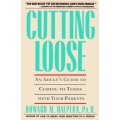
Cutting Loose: An Adults Guide to Coming to Terms With Your Parents by Howard Halpern is a more recent book (2003) that discusses various ways of handling difficult relationships with your parents. Separation may sometimes be necessary but many relationships can be improved dramatically by setting boundaries and by the adult children learning how to respond more effectively to their parents. This book offers guidelines for telling the difference and for making improvements.

I agree with Better Off Now; everyone is worthy of a life without abuse, whatever the source. I must also offer a word of caution for those who feel their parents leave much to be desired. Cutting ties is a drastic step that should be taken very seriously indeed. Separation almost always comes with a bucket-load of negative consequences, even if the overall effect for the adult child turns out to be positive (which can sometimes be far from true). Keep in mind as well that you are not the only player in such a scenario. Might your parent's difficult behavior be an indication they need your help? (e.g. a possible undiagnosed mental illness) Will pulling out mean denying your siblings the support they need from you?

In many cases the appropriate course is to learn how to modify your own behavior so your parents are less able to act as a negative influence in your life. When reading the books I mentioned above, pay attention to the balanced advice about alternatives. If it turns out separation is necessary, then these books provide comprehensive advice for dealing with the many issues that arise from such a decision.

Again, I feel badly for anyone who has to deal with such a gut-wrenching conflict in their life. I hope the sources I mention above can provide some help. If this type of self-help material is not effective for you, counseling is another alternative.

All the best,
Andrew

Do you have a relationship issue in your life? Send in your question and it may become a Dismaying Story. Comments can be anonymous and the identity of email respondents always remains confidential.
Read More ->>

Saturday, September 02, 2006

If You Love Them, Set Them Free

Last week I asked about the struggles that arise as teens gain independence and parents must find a way to let go. Many thanks to all the readers who contributed comments. The sheer volume of responses is, I think, an indication of the importance of this issue and the complexities involved.

No single theme dominated your responses. You mentioned a variety of approaches, including the following:
  • Talk a lot with your children. Discuss important life issues. Teach values and skills. Start when they are very young and continue until the teens become convinced you don't know anything anymore. Then you must step back and trust the foundation you built.
  • If they still live under my roof then they must live by my rules.
  • It is important to encourage good behavior in teens, not just to prohibit the bad.
  • Once they move out, young adults have a need to assert their own control.
  • At some point you need to give more control to the teens. Several respondents mentioned a message like, "That is not what I would do but it's your decision. I'm here for you if you need me."
  • Ban the big no-nos and don't sweat the small stuff.
  • It's not the job of a parent to be a friend.
  • Some parents are tempted to be strict because they fear the child's behavior might reflect poorly on the parents.
  • Being firm and setting limits has a subtext; we love you and we want you to be safe.
  • Parents must show by example, not just tell.
Perhaps the overall message is that letting go can be a difficult struggle, even when parents are mindful of the issues. These difficulties come shining through in the comment from Lisa, who maintains a site called Internet Lovers. Lisa writes:

My kids are 15 1/2 and 17. I've worried all the time about letting my boys go...when is the right time? What if something happens they don't know how to handle? What if they get in with the wrong crowd? God forbid, what if they decide to experiment with drugs? The list is endless.

I feel I've done the best I can at teaching my teens the differences between right and wrong, good and bad. As far as I believe, we instill these traits into them from a very early age. It's been a rocky road for me to let them slowly go over the years. But I grit my teeth and try to show that I have absolute faith in their decisions. I have to trust that I've taught them well, and I have to have faith that they will follow through with that, putting their own unique spin on it.

I say "It's not something I would do, but if that's how you want to do it, then ok, it's up to you." I think this lets them know I'm not keen, but they have a right to do it their own way. If they fall on their faces, they know it happened because of their choice and hopefully learn from it...and it stops me from coming out with "I told you so." Because by twisting the words a little, I didn't lol

Besides the 'typical' teenage changes and angst, and the battle of testosterone going on between my boys during their respective puberties...we haven't done so badly really.

And saying that, I don't think I've ever questioned my own parenting ability more than I have in the past 2 years.


I suspect Lisa's willingness to question her own approach is exactly the strength that allows her to figure out what her boys need most.

Thanks again to everyone for pitching in.
Read More ->>

Saturday, August 26, 2006

Ask the Faithful Readers #4 - Learning to Let Go

Dear Faithful Reader,

Parents often claim that their relationships with teenaged children can bring unique challenges. The desire of young people to spread their wings and become independent adults creates a natural source of conflict. Parents who have been used to giving direction now face opposition when they attempt to do so. We often worry when we must let go, knowing our children might stumble but that they need to take on new responsibilities. I have had people tell me, "I became good friends with my parents, but only AFTER I moved out of the house."

What are your experiences with this situation, either with your children or from your own days as a teenager? What obstacles can make this particularly challenging? What strategies can help ease the way?

Signed, The Inquiring Advice Guy

Comments are preferable for this one (rather than emails), since I'm sure everyone would like to see the responses. I will post my personal favorite next week with a link to the winner's blog.
Read More ->>

Monday, July 24, 2006

Dismaying Story #12: Big Bad Dad

Dear Andrew,

My teenage daughter is getting to the age where the boys will soon come calling. Though I would never actually embarrass her like this, I like to tell people I have my speech all ready for when a young lad arrives at our door to take her on a date. It goes something like this:

"I realize young men today have plenty of social issues to deal with. Well I just want you to know that as of this moment ... I am your social issue."

What do you think?

Signed,
A Protective Dad


Dear Better-Get-Used-To-Waiting-Up-For-Her-To-Come-Home,

You have stated it in a half-joking manner but your letter alludes to a real issue parents face. It can sometimes be more nerve-wracking on the parents than on the children when young folks start to date.

To me this is part of a larger progression we all must go through. Think of the two ends of the maturity spectrum. At the beginning you have very young children who are incapable of making even the simplest of decisions for themselves. Parents direct their lives down to the most detailed level. Eventually these children emerge as independent adults. The parent's role in telling them what they can or should do has either been virtually eliminated or reduced to that of an adviser.

Young teenagers and their parents are partway along in this process. The parents may still have complete control over some aspects of the child's life (for example, where they reside, setting their curfew) and the teenager has likely taken over responsibility for others -- getting themselves dressed in the morning, choosing with whom they will socialize, and so on. This gradual shift of responsibility from parent to child is necessary as the teenager progresses toward adulthood. By the time they are old enough to live independently, they need to have acquired the life skills to manage their lives, to keep themselves healthy, safe and productive.

Mother Nature seems to know about this transition and to imbue teenagers with some of the traits necessary to make it happen. In particular, teenagers have a tendency to rebel against authority. No matter how polite, mature and good-natured your teenager, eventually they will resent it if you continually tell them what to do. A three-year-old will take it, a 15-year-old typically won't. Mother Nature, it seems, doesn't want the 15-year-old to be complacent on this issue. The desire to take responsibility for some of their own decisions is necessary if they are to learn how to function as adults. I understand this about my teenagers, so when I get resistance I try to remind myself this is natural and necessary.

That doesn't mean I have to like it, though.

As parents, we worry. We're used to protecting our children, making the decisions we feel are best for them, keeping them safe. We tend to believe that our own decision-making skills are superior to our children's. After all, we have the benefit of years of experience behind us. We want to help our children avoid the mistakes we made, perhaps to enjoy opportunities we missed. Often all of that ends up taking a back seat, however, to Mother Nature's larger agenda. "I just want to do it my way," your teenager will say.

And so we worry.

Transitions can be especially tough and dating is a perfect example. Until this point your daughter has likely done most of her socializing in groups, with other girls, with "just friends." Now all of a sudden she will be out on her own, needing to rely on her own abilities for a time to remain healthy and safe. Part of this depends on the young man. Chances are, though, you don't know him as well as your daughter. Will he treat her well? Will he exercise good judgment? Or will he pressure her to do things, to be in places and situations she might not ordinarily find herself? Parents may worry about sex (both consensual and otherwise), sexually transmitted diseases, pregnancy, peer pressure, drinking and drugs, automobile accidents, emotional trauma, and on and on.

And here's the tough part. We can talk about these things with our children. We can prepare, coach, threaten and cajole them, but when it comes right down to it, we can't be there when the decisions are finally made. Our children will be (shudder) on their own at crunch time.

This is a good thing. No, really, it is. It's all part of the progression toward adulthood. Also, it doesn't mean we have to relinquish all control. We can still talk to our children, monitor where they are going, try to establish safe and reasonable limits. Some situations are obvious red danger flags and should be actively discouraged. What would you think if your fourteen-year-old daughter said her date would be taking her to a cheap hotel room for the evening? Not happening, of course. What if it's a party where you know some of the people will be nineteen and twenty years old? It's a safe assumption that party will involve drinking and is probably not the best place for your fourteen year old, so you tell her to stay away. If you have developed a solid relationship with your child, she will listen.

Ah. There it is. The big "if." If you and your child have long ago established mutual trust and respect; if the two of you have repeatedly discussed issues like substance abuse, safe driving, peer pressure and sex for many years, long before dating becomes an issue; if you have served as a good role model, demonstrating responsible behavior in similar situations; if you have helped your teenager grow into a responsible and mature young adult; if all of these things are in place, then dating is probably a low risk activity.

"Wait a minute, Andrew," you say. "What's this 'probably' stuff?"

Sorry. That's the best you're going to get. Life, it seems, does not come with a money back guarantee.

So you start preparing for your conversation with that young man many years before he shows up at your door. Do that and you will be ready for him. More importantly, so will your daughter.

As for your speech, I trust you wrote the letter with your tongue firmly in your cheek. I'm sure you'll be a perfect gentleman when the first young man arrives to pick up your daughter. I also have a sneaking suspicion, though, that you'll be tempted to turn to your wife as soon as they're out the door and say with a grin, "I should have told him!"

Sincerely,
Andrew

Which life transition stresses you the most? What was your experience as your children began to take on new responsibilities? Be sure to email your own Dismaying Story or enter a comment using the link below.
Read More ->>